


 English
 中文简体
 русский
 Español
 عربى

Computer and Instrument Shielded Cable for Reliable Industrial Signal Transmission
Content
- 1 1. What Is Computer and Instrument Shielded Cable?
- 2 2. Why Signal Integrity Matters in Industrial Automation
- 3 3. Structural Features That Support Reliable Transmission
- 4 4. Main Advantages Compared with Ordinary Unshielded Signal Cable
- 5 5. Product Applications
- 6 6. Manufacturing Strengths of Wuxi Guanghuan Cable Co., Ltd.
- 7 7. Advanced Production and Process Control
- 8 8. Quality Management and Certifications
- 9 9. Advantages for International and Industrial Buyers
- 10 10. How to Select the Correct Cable Configuration
- 11 11. Installation Practices That Preserve Cable Performance
- 12 12. Maintenance and Troubleshooting
- 13 13. Why Manufacturing Quality Is a Competitive Advantage
- 14 14. Frequently Asked Questions
- 14.1 What is the main purpose of computer and instrument shielded cable?
- 14.2 Where is this cable commonly used?
- 14.3 Does shielding eliminate all electromagnetic interference?
- 14.4 Is one shielding structure suitable for every application?
- 14.5 Can the cable be used outdoors?
- 14.6 How does this product compare with ordinary unshielded cable?
- 14.7 What information should be included in an inquiry?
- 14.8 How should the shield be connected?
- 14.9 What testing is important before commissioning?
- 14.10 Why choose an experienced cable manufacturer?
- 15 15. Conclusion
- 16 References
- 17 Product: Computer and Instrument Shielded Cable
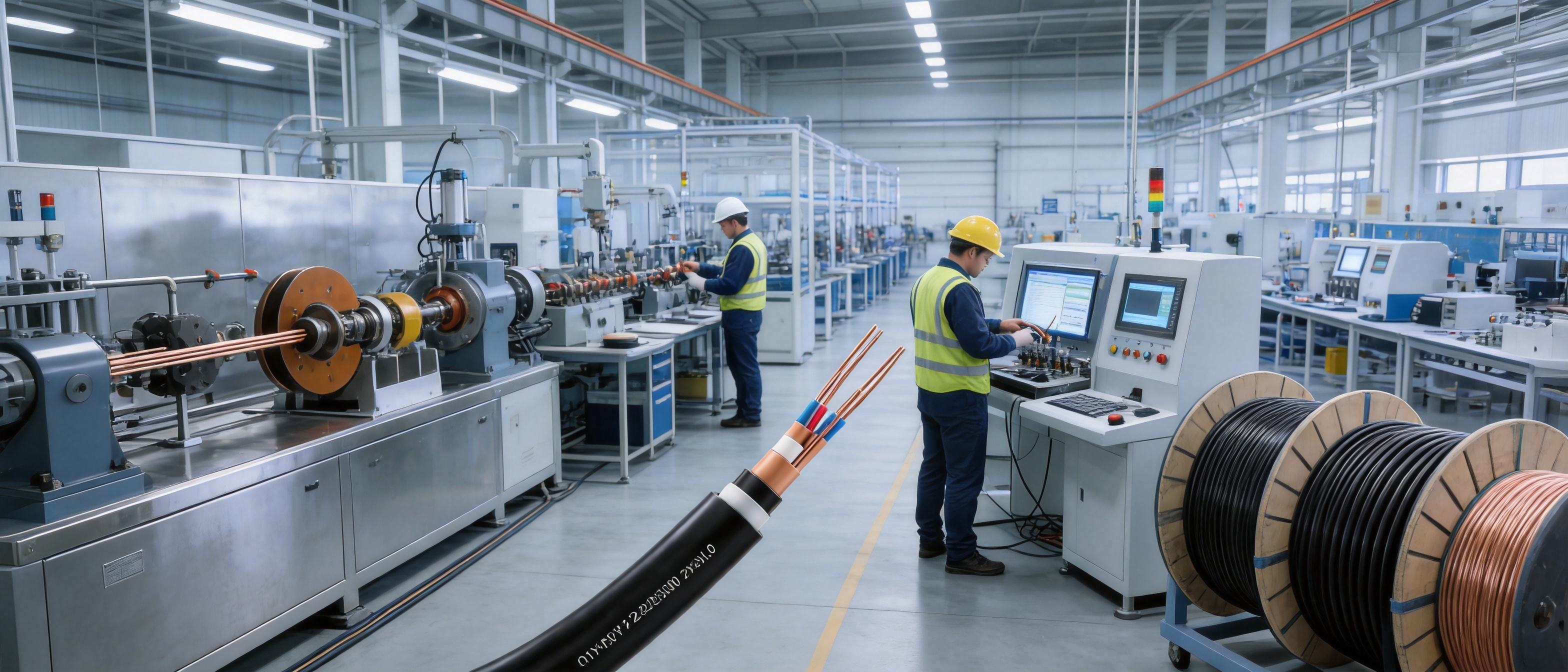
Modern industrial facilities depend on accurate information. Temperature transmitters, pressure instruments, programmable controllers, data acquisition systems, computers, automation devices, and detection units must exchange signals continuously and reliably. When the signal path is exposed to motors, variable-frequency drives, switching equipment, transformers, welding systems, power cables, or other sources of electromagnetic energy, even a small amount of interference can reduce measurement accuracy and affect control performance. A properly designed computer and instrument shielded cable provides a practical solution for protecting low-voltage signals in these demanding environments.
Computer and instrument shielded cables are specialized low-voltage signal transmission cables used to connect computer systems with instrumentation and automation equipment. Their main function is not to carry large amounts of electrical power, but to transfer sensitive analog, digital, control, and measurement signals with stability and integrity. The cable’s conductors, insulation, pair or group arrangement, shielding system, protective layers, and manufacturing consistency work together to reduce the effects of electromagnetic interference and unwanted signal coupling.
For industrial automatic control systems and detection distribution units, cable selection is a critical engineering decision. A cable that appears suitable based only on conductor size or voltage rating may not provide adequate protection against interference. The correct product must also be evaluated according to its circuit arrangement, shielding method, installation environment, mechanical requirements, operating temperature, grounding approach, and compatibility with the connected instruments.
Wuxi Guanghuan Cable Co., Ltd. manufactures computer and instrument shielded cable as part of its electrical equipment cable range. The company combines cable research and development, conductor processing, insulation and sheathing production, shielding operations, testing, and quality management in an integrated manufacturing system. Its experience in power cables, electrical equipment wires and cables, bare conductors, overhead insulated cables, rail transit cables, and renewable-energy cable applications supports a broad understanding of electrical performance and industrial reliability.
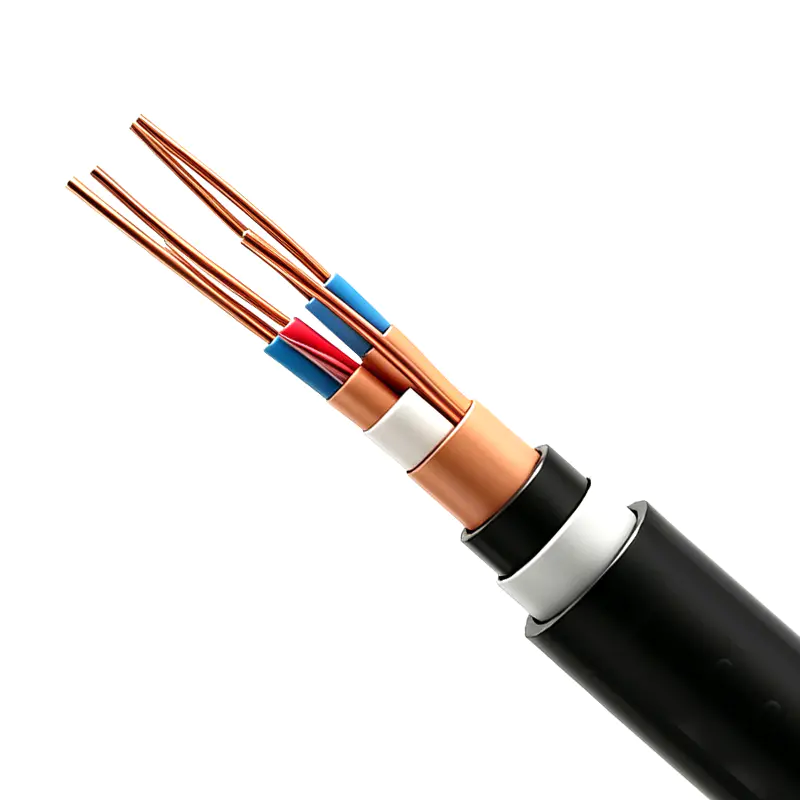
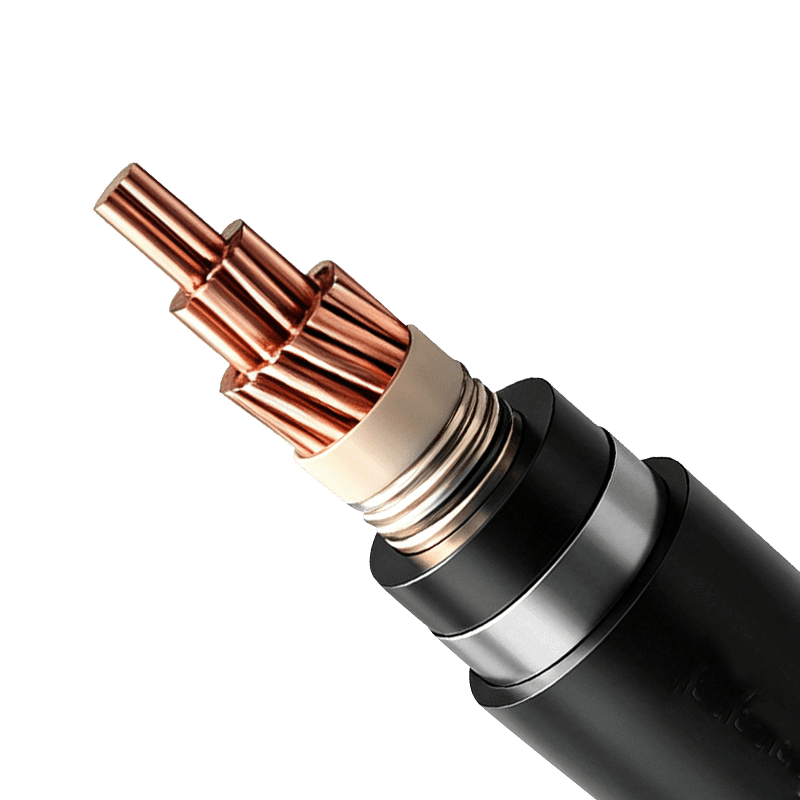
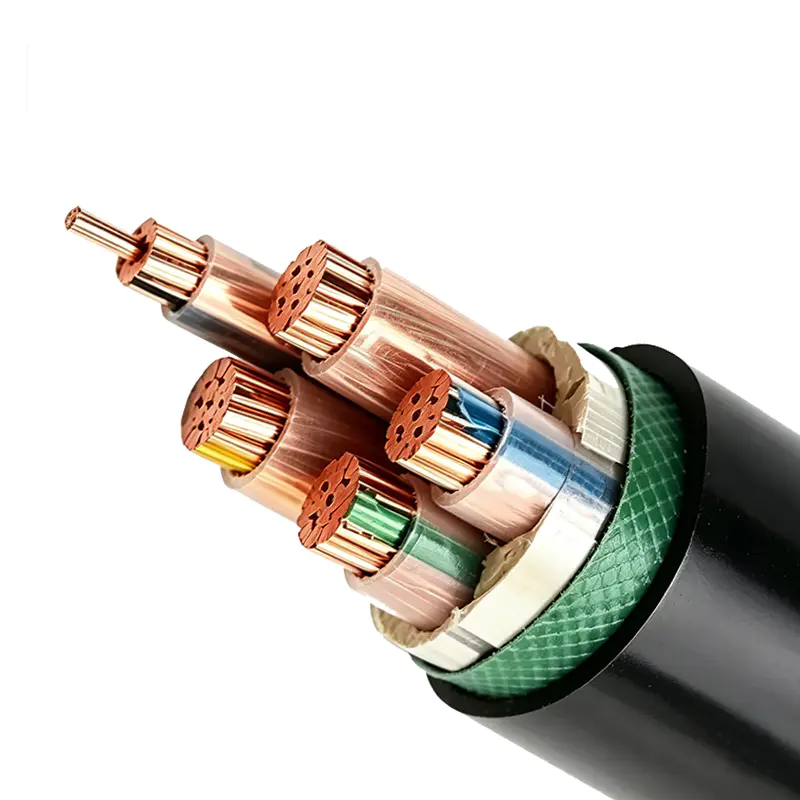
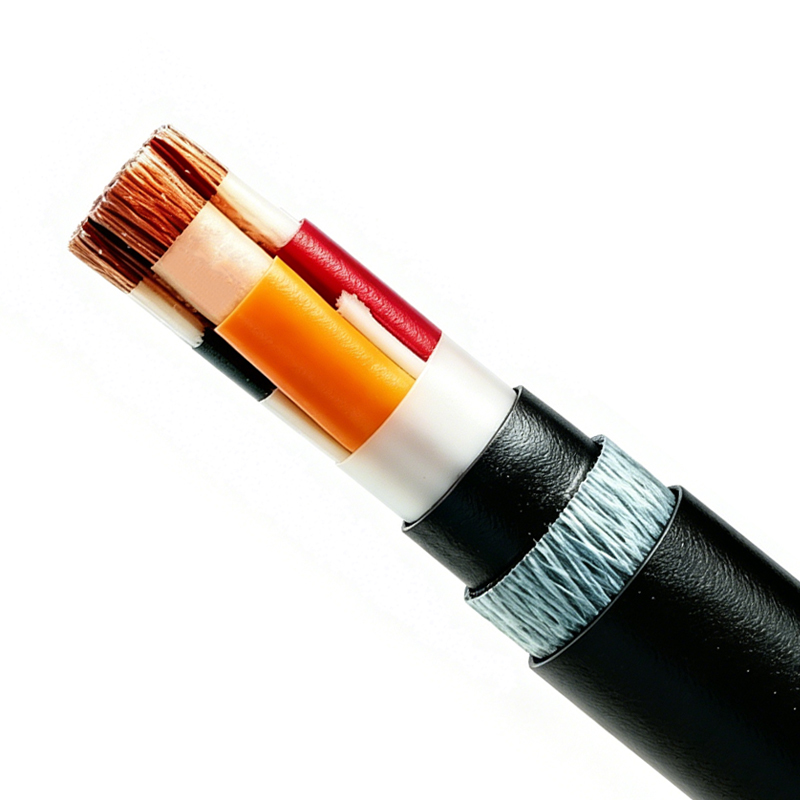
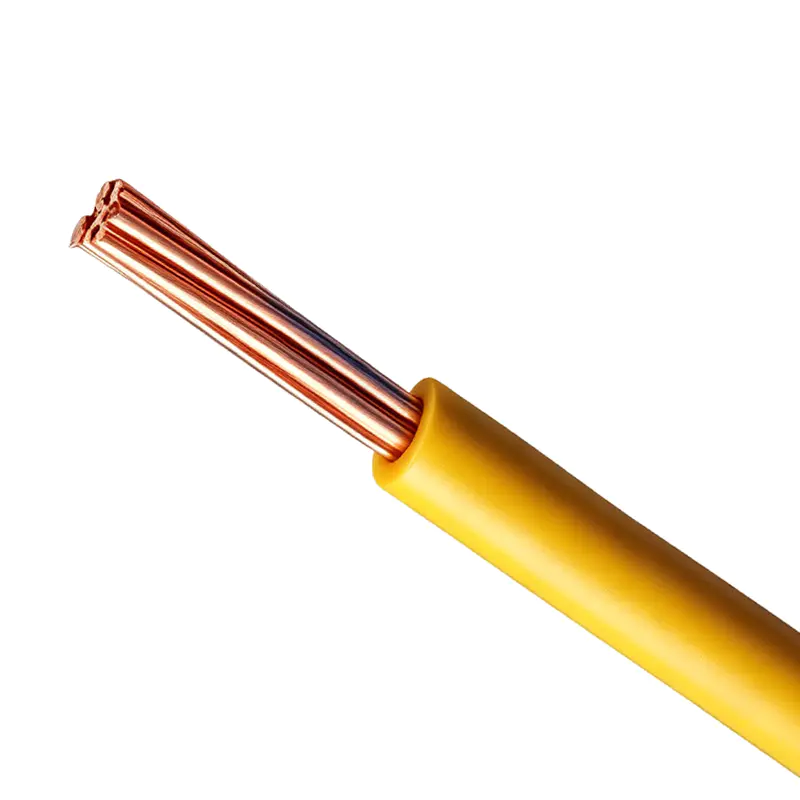
Computer and Instrument Shielded Cable
1. What Is Computer and Instrument Shielded Cable?
Computer and instrument shielded cable is a multi-conductor cable designed for the transmission of low-voltage signals between computers, electronic instruments, automation systems, control cabinets, sensing devices, and related equipment. Depending on the system design, the cable may contain individual conductors, twisted pairs, multiple pairs, groups, or other internal arrangements intended to support signal separation and organized circuit transmission.
The term “shielded” refers to a conductive layer or combination of conductive layers placed around the signal conductors. This shield may be configured around individual pairs, groups, or the complete cable core. Its purpose is to intercept or reduce the influence of external electromagnetic fields and to limit the radiation or coupling of electrical noise generated by the cable itself. The shield must be properly connected and grounded according to the system design to provide its intended benefit.
In a typical industrial application, a sensor or field instrument produces a small electrical signal. That signal travels through the cable to a control system, computer, programmable controller, monitoring unit, or data acquisition device. If the cable runs close to high-current conductors or switching equipment, noise may be induced into the signal circuit. The result can include unstable readings, false alarms, communication errors, inaccurate control commands, or unexplained process fluctuations.
A shielded cable helps create a more controlled transmission path. It does not eliminate every possible source of interference, and it cannot compensate for incorrect grounding, poor installation, damaged connectors, or unsuitable system design. However, when the cable structure and installation method are properly matched to the application, shielding can significantly improve signal reliability in industrial environments.
2. Why Signal Integrity Matters in Industrial Automation
Industrial automation systems often depend on signals that are relatively small compared with the electrical energy present elsewhere in the facility. A temperature sensor may send a low-level analog signal, while an instrument may communicate through a digital or pulse-based signal. These signals contain information about the condition of a machine or process. Any distortion introduced during transmission can affect the interpretation of that information.
Signal integrity means that the information received by the control or monitoring system remains sufficiently close to the information generated by the field device. This includes signal amplitude, timing, waveform, frequency, polarity, and data content. For analog systems, signal integrity affects measurement accuracy and stability. For digital systems, it influences communication reliability, error rates, and the ability of receiving equipment to distinguish valid signals from noise.
Many industrial sites contain multiple sources of electromagnetic disturbance. Large motors can generate magnetic fields and switching transients. Variable-frequency drives can produce high-frequency electrical noise. Contactors, relays, inverters, welding equipment, and power converters can introduce conducted and radiated interference. Parallel routing with power cables may also create unwanted coupling between circuits.
The impact of interference may not always be immediately visible. A control system may continue operating while producing incorrect values at certain times of day, during motor starting, or when a nearby machine changes operating mode. Intermittent faults are especially difficult to diagnose because they may disappear before maintenance personnel can inspect the system. Choosing a suitable shielded cable during the original design stage is usually more efficient than trying to resolve signal problems after installation.
Computer and instrument shielded cables are therefore important components in process control, industrial measurement, factory automation, building management, energy facilities, transportation systems, and other applications in which dependable low-voltage communication is required.
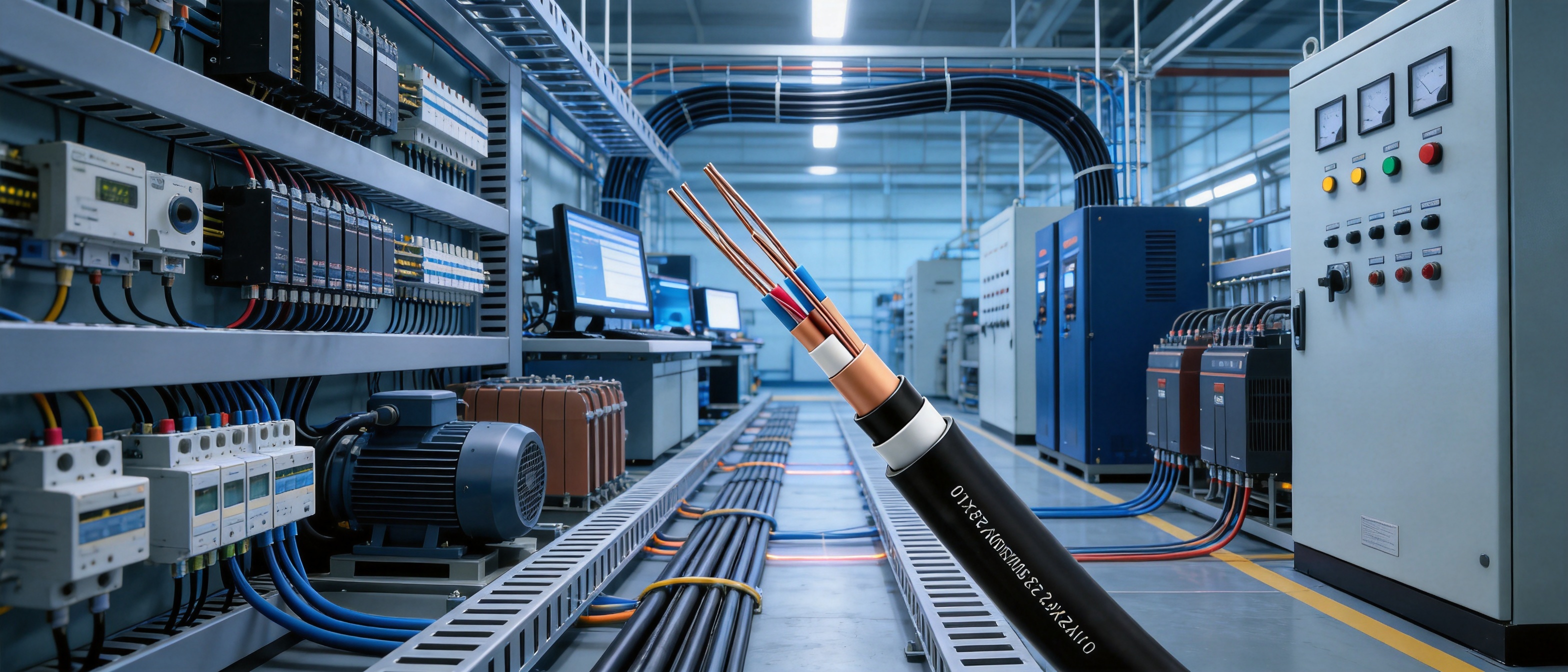
3. Structural Features That Support Reliable Transmission
3.1 Conductors for Stable Electrical Performance
The conductor is the primary path for signal transmission. Conductor material, cross-sectional area, stranding arrangement, surface condition, and dimensional consistency influence electrical resistance, flexibility, termination quality, and long-term performance. For instrumentation and computer cable, the conductor must be manufactured consistently so that the electrical characteristics of the circuit remain predictable along the cable length.
Multi-conductor and paired designs require careful control of conductor identification and arrangement. Clear color coding, stable lay length, and orderly assembly help installers connect circuits correctly and reduce the possibility of wiring errors. In applications involving multiple signal pairs, consistent production also supports balanced circuit behavior and more organized termination inside control cabinets and distribution units.
3.2 Insulation for Circuit Separation
Insulation separates adjacent conductors and protects the signal circuit from leakage and accidental contact. It also contributes to the cable’s dielectric performance, flexibility, mechanical protection, and suitability for the intended environment. A well-controlled insulation process provides uniform coverage and helps avoid local weaknesses that could affect reliability.
For instrumentation systems, insulation quality is particularly important because low-voltage signals can be affected by leakage, capacitance, and unwanted coupling. The insulation system must be selected with consideration for the electrical characteristics of the circuit, the operating environment, and any relevant customer or project requirements.
3.3 Pairing and Internal Organization
Where the circuit design requires it, conductors may be arranged in pairs or groups. Pairing can help control the relationship between circuit conductors and reduce susceptibility to certain forms of noise. The precise design depends on the signal type, transmission distance, equipment interface, and applicable technical requirements.
Internal organization also affects installation efficiency. A cable that is clearly identified and consistently assembled makes it easier for technicians to trace circuits, terminate conductors, and maintain the system. This can reduce commissioning time and improve the accuracy of future maintenance work.
3.4 Shielding System
The shielding system is the defining feature of this cable category. A conductive shield can provide a path for induced noise currents and reduce the amount of electromagnetic energy reaching the signal conductors. The shield may be based on a metallic tape, wire braid, drain-wire arrangement, or another engineered configuration, depending on the product design and application requirements.
Different shielding designs offer different balances between coverage, flexibility, mechanical strength, termination convenience, and cost. A shield intended for a fixed industrial installation may be optimized differently from a cable intended for repeated movement. The correct selection should therefore be based on the actual project conditions rather than on the word “shielded” alone.
Shield effectiveness also depends on continuity. Gaps, poor overlaps, damaged shield layers, or incomplete terminations can reduce performance. For this reason, shielding operations require controlled manufacturing conditions and appropriate inspection. The cable should also be installed in a way that preserves the shield and follows the grounding philosophy of the control system.
3.5 Outer Sheath and Environmental Protection
The outer sheath protects the internal cable structure from abrasion, moisture, dust, handling damage, and other environmental influences. The appropriate sheath material and design depend on the installation location. Indoor control cabinets, outdoor instrument routes, industrial production floors, cable trays, conduits, and equipment connections may all impose different requirements.
When a project includes exposure to oil, chemicals, ultraviolet radiation, water, mechanical impact, or unusual temperature conditions, the cable specification must be reviewed carefully. Computer and instrument shielded cable is a product family rather than a single universal construction. The final configuration should be confirmed against the manufacturer’s technical data and the application environment.
4. Main Advantages Compared with Ordinary Unshielded Signal Cable
The most important advantage of shielded cable is improved resistance to electromagnetic interference. An ordinary unshielded cable may be adequate in a clean electrical environment with short transmission distances and limited nearby equipment. However, the same cable may be more vulnerable when it is routed near power circuits, switching devices, motors, or industrial converters.
A shielded design provides an additional protective layer between sensitive conductors and the surrounding electromagnetic environment. This can help reduce unwanted signal fluctuations, communication interruptions, and measurement errors. In systems where stable data is essential, the value of improved signal consistency can exceed the initial difference in cable cost.
Shielded cable can also help reduce cross-talk between adjacent circuits. In a large control installation, numerous cables may share trays, conduits, cabinets, or terminal areas. Signals from one circuit can influence another if the arrangement is not properly designed. Shielding, appropriate pair configuration, and disciplined routing together help maintain circuit separation.
Another advantage is improved suitability for complex industrial networks. As factories adopt more sensors, automation devices, data collection systems, and intelligent control equipment, the number of low-voltage signal circuits continues to increase. A cable designed specifically for instrumentation and computer connections is generally more appropriate than a general-purpose wire selected without considering interference conditions.
Shielded cable may also support more predictable troubleshooting. When the cable structure is engineered for signal transmission and the shield is continuous, maintenance teams can more easily distinguish cable-related problems from equipment, grounding, or software problems. Predictable construction does not eliminate the need for testing, but it creates a stronger foundation for system diagnosis.
| Evaluation Factor | Computer and Instrument Shielded Cable | Ordinary Unshielded Signal Cable |
|---|---|---|
| Resistance to electromagnetic interference | Designed with a conductive shielding system to reduce external noise coupling | Relies mainly on routing, spacing, and the surrounding environment |
| Suitability for industrial automation | Well suited to instrumentation, control, detection, and computer connections | May be suitable only where interference levels are limited |
| Circuit separation | Shielding and organized internal construction can help reduce cross-talk | More dependent on physical separation and installation conditions |
| Measurement stability | Supports more consistent transmission of sensitive signals when properly installed | May be more susceptible to transient noise and induced interference |
| Installation considerations | Requires correct shield termination and grounding practices | Usually simpler to terminate, but may require stricter routing separation |
| Application flexibility | Available in configurations for different signal, environmental, and project requirements | Often selected for less demanding signal environments |
The comparison does not mean that every shielded cable is automatically superior in every installation. Shielding creates additional design and termination requirements, and the product must match the connected equipment. The practical advantage appears when the cable is selected, manufactured, installed, and grounded as part of a complete signal-transmission system.
5. Product Applications
5.1 Industrial Automatic Control Systems
Automatic control systems depend on continuous communication between field instruments, input and output modules, controllers, computers, and operator interfaces. Shielded cable can be used for relevant low-voltage circuits where electromagnetic interference may affect control signals. Its application can support the connection of sensors, transmitters, actuators, monitoring devices, and control cabinets.
In a process plant, signals may travel from equipment located on the production floor to a centralized control room. These routes can pass through areas containing motors, pumps, power distribution equipment, and variable-speed machinery. A shielded signal cable helps create a more suitable transmission path for this mixed electrical environment.
5.2 Detection and Distribution Units
Detection distribution units collect, organize, and transmit information from multiple instruments. They are often used in facilities where many measurement points must be monitored simultaneously. The cable must support organized circuit identification and dependable transmission over the required route length.
When numerous signal circuits are installed together, cable selection and routing become especially important. Shielded cables can contribute to improved separation between measurement circuits and nearby sources of interference. Proper labeling and termination further support efficient commissioning and maintenance.
5.3 Computer and Data Acquisition Connections
Computers and data acquisition equipment require stable connections to receive information from field devices. Data may be used for process analysis, equipment monitoring, historical records, alarm management, or production optimization. If interference causes missing or corrupted information, the value of the entire monitoring system may be reduced.
Computer and instrument shielded cable is intended for this type of low-voltage signal connection. The exact cable construction should be matched to the interface, communication method, transmission distance, and installation environment specified by the project engineer.
5.4 Factory Automation and Production Lines
Automated production lines contain sensors, controllers, motors, drives, inspection systems, robotic equipment, and safety devices. These systems operate in close proximity, and their electrical activities can influence one another. Shielded instrumentation cable can be used in appropriate low-voltage connections to improve the stability of signals between devices.
In production environments, mechanical handling and installation efficiency are also important. Cables must be routed neatly, protected from unnecessary abrasion, and terminated correctly. The selected construction should reflect whether the cable is fixed, occasionally moved, or subject to continuous flexing.
5.5 Energy, Utility, and Infrastructure Facilities
Power generation, energy storage, photovoltaic, wind power, utility, and infrastructure facilities use extensive monitoring and control systems. Although power cables carry the main electrical load, shielded instrumentation cables transmit the information needed to supervise equipment and maintain safe operation.
In these facilities, low-voltage signal circuits may be routed near high-voltage equipment, converters, transformers, and switching systems. A well-designed shielded cable can support more reliable instrument connections when combined with suitable separation, grounding, and installation practices.
6. Manufacturing Strengths of Wuxi Guanghuan Cable Co., Ltd.
Wuxi Guanghuan Cable Co., Ltd. was founded in 1998 and is headquartered in Guanlin Town, Yixing City, Jiangsu Province, an area recognized as the “Cable Capital of China.” The company has developed into a national high-tech cable manufacturer with registered capital of RMB 400.8 million and a production site covering more than 100,000 square meters, including over 45,000 square meters of building area.
The company operates more than 70 advanced production and testing lines. This manufacturing scale supports multiple cable categories and allows production activities to be organized across different processes and product requirements. For computer and instrument shielded cable, a broad equipment base is valuable because the product involves more than simple conductor drawing. It requires coordinated control of conductor production, insulation, identification, assembly, shielding, sheathing, testing, and final inspection.
Guanghuan Cable employs more than 140 people, including over 30 technical professionals. Technical personnel contribute to product development, process control, quality assurance, production planning, and customer support. This combination of manufacturing capacity and technical expertise enables the company to address project requirements that may vary according to circuit arrangement, shielding design, environmental conditions, and installation method.
The company manufactures power cables, electrical equipment wires and cables, bare conductors, overhead insulated cables, high-speed railway and urban rail transit cables, energy storage cables, photovoltaic cables, wind power cables, and other specialized products. Its portfolio includes more than 100 product categories and over 30,000 specifications under the registered Liguang brand. This range demonstrates experience in producing cables for different electrical, mechanical, environmental, and industry-specific conditions.
A manufacturer with experience across several cable sectors can apply cross-disciplinary knowledge to instrumentation cable production. Power cable manufacturing emphasizes insulation consistency, conductor quality, voltage testing, and process discipline. Specialized cable production requires attention to application-specific structures and customer requirements. These capabilities are relevant to the production of reliable computer and instrument shielded cables.
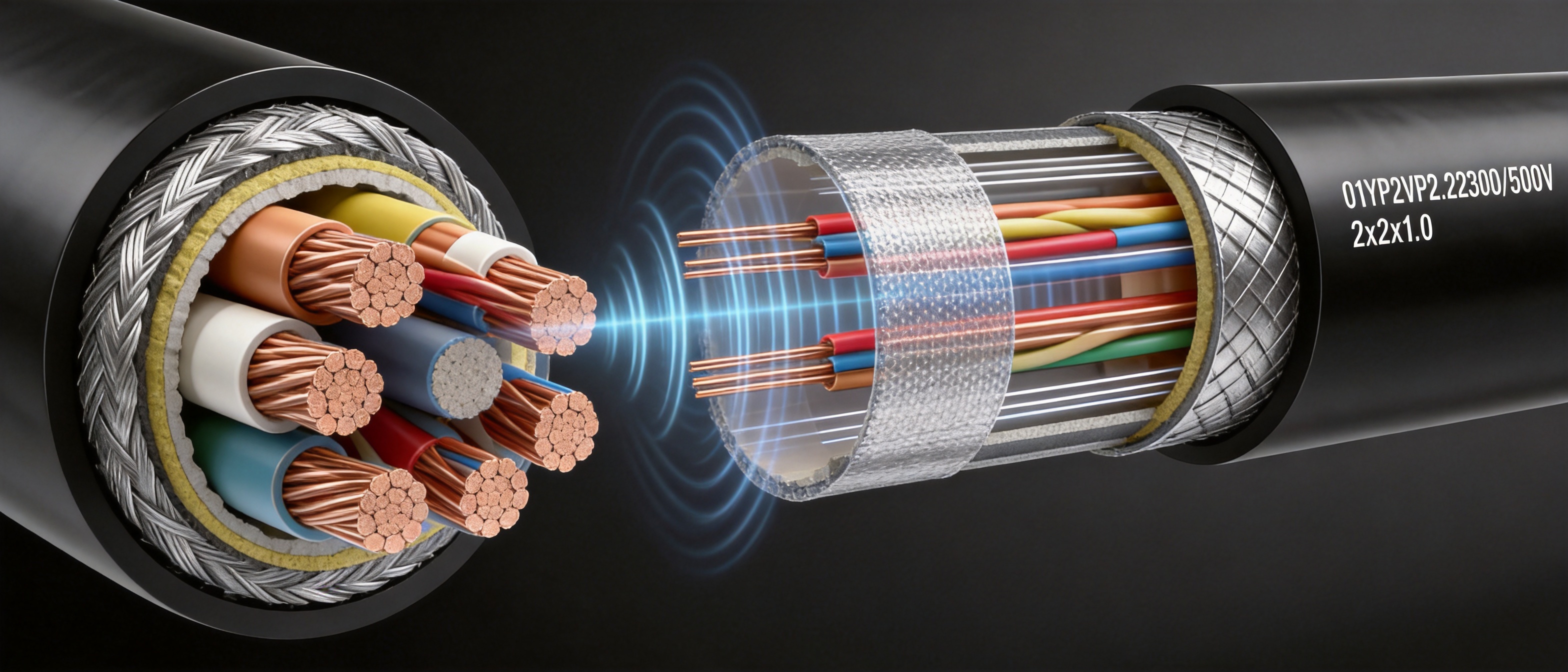
7. Advanced Production and Process Control
7.1 Conductor Preparation
Production begins with the preparation of conductors suitable for the specified cable design. Conductor processing must maintain dimensional consistency and a stable surface condition. Where stranded conductors are required, the stranding process must produce an orderly and uniform assembly that supports subsequent insulation and cable formation operations.
Consistent conductor preparation is important because variations can affect resistance, flexibility, insulation coverage, and the final outside dimensions of the cable. Automated or controlled production equipment helps reduce process variation and supports repeatable product quality.
7.2 Insulation Extrusion
Insulation is applied through a controlled extrusion process. The process must maintain suitable thickness, concentricity, surface quality, and adhesion. Online monitoring and regular inspection can help identify deviations before the cable proceeds to later stages.
For low-voltage signal cable, a uniform insulation layer supports circuit separation and reliable electrical performance. It also provides a stable foundation for identification, pairing, grouping, shielding, and outer sheathing.
7.3 Pairing, Cabling, and Identification
After individual conductors are insulated, they may be paired, grouped, or assembled into the required cable core. This stage demands control of lay length, tension, alignment, and circuit identification. A stable assembly helps maintain the intended electrical relationship among the conductors and supports accurate installation.
Identification systems are essential when a cable contains multiple circuits. Consistent colors, numbers, or other approved markings allow installers to connect the cable correctly and facilitate later maintenance. Manufacturing discipline at this stage reduces the risk of circuit confusion in complex control systems.
7.4 Shield Application
The shield is applied around the appropriate pair, group, or complete cable core according to the product design. The shielding process must preserve coverage and continuity while avoiding damage to the insulation or internal conductors. Tension control is important because excessive tension may deform the core, while insufficient control can lead to uneven coverage or instability during later processing.
The manufacturing method should also support practical termination. A shield that is electrically effective but difficult to prepare in the field may increase installation time or create avoidable errors. Good product design considers both electromagnetic performance and the requirements of technicians working with the cable.
7.5 Outer Sheathing
The outer sheath is applied to protect the cable assembly. Its thickness, surface quality, concentricity, and dimensional consistency are controlled according to the intended product specification. The finished sheath should provide the required level of protection without making the cable unnecessarily difficult to install.
During sheathing, the production line must maintain stable temperature, pressure, speed, and cooling conditions. Process control helps ensure a smooth outer surface and reduces the possibility of defects such as voids, marks, uneven thickness, or local damage.
7.6 Testing and Inspection
Testing is an essential part of cable production. Depending on the applicable product requirements, inspection may include conductor resistance, insulation performance, dimensional checks, continuity, withstand testing, shielding continuity, visual examination, and other electrical or physical evaluations.
Wuxi Guanghuan Cable Co., Ltd. uses advanced equipment such as online eccentricity monitors, high-voltage series resonance testers, and partial discharge detectors in its quality-control system. Although the exact tests applied to a particular computer and instrument shielded cable depend on its design and technical specification, these capabilities reflect the company’s investment in process monitoring and electrical testing.
Online eccentricity monitoring is valuable because it helps identify whether insulation is evenly distributed around the conductor. High-voltage series resonance testing supports efficient testing of relevant cable products under controlled conditions. Partial discharge detection can help identify insulation defects in products for which such testing is applicable. Together with routine inspection and final testing, these tools support a more comprehensive approach to manufacturing quality.
8. Quality Management and Certifications
Reliable signal transmission depends not only on product design but also on a repeatable quality-management system. Wuxi Guanghuan Cable Co., Ltd. has obtained ISO 9001 quality management certification, ISO 14001 environmental management certification, ISO 45001 occupational health and safety certification, and ISO 50001 energy management certification.
The company has also obtained GB/T 29490 intellectual property management certification, Green Management System certification, Social Responsibility Management System certification, and After-Sales Service Management System certification. These certifications cover different aspects of business and manufacturing performance. Together, they indicate that the company’s management approach extends beyond one final inspection step.
Product-related qualifications include CCC, TÜV, product carbon footprint, and China Energy-Saving and Environmentally Friendly Product certifications, among others. The relevance of a particular certification depends on the product model, market, project, and applicable standard. Customers should confirm the certification status of the exact cable configuration required for their application.
Guanghuan Cable has been recognized as a National High-Tech Enterprise, a Jiangsu Specialized, Sophisticated, Distinctive and Innovative SME, a Jiangsu Provincial Green Factory, a National Intellectual Property Advantage Enterprise, and a Quality Integrity Enterprise. These recognitions support the company’s profile as a technology-oriented cable manufacturer with a structured approach to production and development.
The company has also passed qualification and capability verification for power cables and conductors conducted by the State Grid Corporation of China. While computer and instrument shielded cable has its own application requirements, experience with rigorous qualification processes demonstrates the importance the company places on documented capability, product consistency, and compliance.
9. Advantages for International and Industrial Buyers
Industrial buyers usually evaluate more than the initial purchase price. They also consider product consistency, delivery capability, technical support, documentation, customization, certification, and the supplier’s ability to provide repeat orders. A cable manufacturer with extensive production infrastructure can offer advantages in each of these areas.
First, a broad manufacturing base can support stable production for both standard and project-specific orders. Computer and instrument shielded cables may be required in different conductor counts, pair configurations, shielding arrangements, sheath materials, lengths, and packaging formats. A supplier with multiple production and testing lines is better positioned to organize these requirements than a company focused on only one narrow product type.
Second, in-house technical and testing resources can improve communication between the buyer and the manufacturer. Engineering discussions may involve route conditions, interference levels, signal types, grounding methods, cable dimensions, installation limitations, or required documentation. Technical personnel can help clarify which product characteristics should be confirmed before production.
Third, an established quality system supports repeatability. Industrial projects often require replacement cable, expansion cable, or additional orders months or years after the original installation. Consistent manufacturing records and documented processes make it easier to maintain continuity between production batches.
Fourth, a wide product portfolio can simplify procurement. A customer requiring power cables, control cables, overhead conductors, photovoltaic cables, energy storage cables, and instrumentation cables may prefer to work with a manufacturer capable of supplying several categories. This can reduce supplier complexity while allowing each cable to be selected according to its specific application.
Finally, the company’s after-sales service management certification reflects an emphasis on support after delivery. Technical service remains important because correct installation, shield termination, routing, and maintenance influence the actual performance of the cable in the field.
10. How to Select the Correct Cable Configuration
Selection should begin with the signal and equipment requirements. The buyer should identify whether the cable will carry analog measurement signals, digital communication, control signals, pulse signals, or other low-voltage circuits. The number of circuits, conductor arrangement, transmission distance, and interface type should be documented before a product is chosen.
The electromagnetic environment must also be evaluated. Important considerations include proximity to motors, drives, transformers, high-current conductors, switching equipment, welding machines, converters, and radio-frequency sources. The greater the interference risk, the more carefully the shielding design and installation method should be reviewed.
Installation conditions are equally important. The buyer should determine whether the cable will be installed indoors or outdoors, in a tray or conduit, in a control cabinet, underground, in a damp area, or near oil and chemicals. Temperature range, ultraviolet exposure, mechanical stress, bending requirements, and possible movement should be included in the technical inquiry.
The grounding and shield-termination method must be compatible with the connected equipment and control-system design. A shielded cable should not be selected without considering how the shield will be connected at the equipment ends. The customer should follow the equipment manufacturer’s instructions and relevant engineering standards.
Documentation should include the cable construction, conductor details, insulation and sheath materials, shielding arrangement, dimensions, test requirements, applicable standards, packaging, marking, and inspection documents. If a project requires special certification or approval, this should be stated before quotation and production.
| Selection Item | Questions for Project Review |
|---|---|
| Signal type | Is the cable used for analog, digital, control, measurement, pulse, or computer-related transmission? |
| Number of circuits | How many conductors, pairs, or groups are required? |
| Interference environment | Will the cable be routed near drives, motors, transformers, power cables, or switching equipment? |
| Shield arrangement | Is individual-pair, group, overall, or combined shielding appropriate for the system? |
| Installation location | Will the cable be installed indoors, outdoors, in a tray, conduit, cabinet, or other route? |
| Mechanical conditions | Is the cable fixed, occasionally moved, flexed, pulled, or exposed to abrasion? |
| Environmental exposure | Are moisture, oil, chemicals, ultraviolet radiation, temperature changes, or dust present? |
| Termination and grounding | How will the conductors and shield be connected to the instruments and control equipment? |
| Compliance requirements | Which standards, certifications, inspections, and documents are required for the project? |
11. Installation Practices That Preserve Cable Performance
Even a well-manufactured shielded cable can perform poorly if it is installed incorrectly. The cable should be routed according to the project’s electromagnetic compatibility plan. Where practical, signal cables should be separated from high-power cables, and parallel runs should be minimized when they may increase unwanted coupling.
Crossings between signal and power cables are often arranged at suitable angles to reduce the length of parallel exposure. Metal trays, conduits, barriers, and grounding structures may also be used as part of the overall installation design. The exact approach depends on the facility and the applicable engineering standards.
During installation, the cable should not be pulled beyond its permitted tension or bent below its recommended minimum radius. Excessive pulling force can damage internal conductors, insulation, or the shield. Sharp bends can deform the cable core and reduce shielding continuity. The product’s technical documentation should be followed for handling limits.
The outer sheath should be protected from cuts, crushing, abrasion, and unnecessary contact with sharp edges. Cable glands, clamps, terminal blocks, and connectors should be suitable for the cable diameter and construction. Improper accessories can place stress on the cable or interrupt the shield connection.
Shield termination is a critical step. The shield should be prepared without damaging the insulation or conductors, and the connection should provide the intended electrical continuity. The correct termination method may vary according to the equipment manufacturer’s instructions, the frequency characteristics of the interference, and the grounding architecture of the system.
After installation, the cable route and circuit identification should be recorded. Continuity, insulation condition, shield continuity, and relevant signal performance should be checked before the system is placed into service. Clear records help maintenance personnel trace circuits and identify changes during future modifications.
12. Maintenance and Troubleshooting
Routine maintenance should include visual inspection of accessible cable sections, terminals, glands, shields, and support points. Signs of sheath damage, overheating, chemical attack, moisture entry, or excessive mechanical stress should be investigated promptly.
If a signal becomes unstable, technicians should first determine whether the problem is continuous or intermittent. They should review recent changes to nearby power equipment, routing, grounding, connectors, and control-system settings. The cable should be tested together with the connected equipment rather than examined in isolation.
Common cable-related problems include conductor breakage, insulation damage, poor termination, shield discontinuity, incorrect circuit identification, excessive bending, and moisture penetration. However, electromagnetic interference may also result from grounding loops, unsuitable equipment interfaces, or incorrect routing. A complete troubleshooting process should consider the entire signal path.
Replacement cable should match the original construction as closely as practical. Substituting an unshielded cable for a shielded design may create new interference problems, even if the conductor size is similar. Likewise, changing the shielding arrangement or sheath material without reviewing the application can affect system performance and installation safety.
13. Why Manufacturing Quality Is a Competitive Advantage
In a competitive cable market, product differentiation is not limited to catalog specifications. Manufacturing consistency, technical responsiveness, testing capability, and long-term supply reliability can be equally important. A computer and instrument shielded cable must perform consistently across its entire length and from one production batch to the next.
Wuxi Guanghuan Cable Co., Ltd. combines a long operating history with substantial production capacity. Since its establishment in 1998, the company has developed capabilities covering research, development, manufacturing, testing, and service. Its more than 70 advanced production and testing lines provide a foundation for organized and scalable production.
The company’s technical team, quality systems, certifications, and broad product portfolio create several practical advantages. Buyers can communicate requirements to a manufacturer familiar with many cable applications. Production can be coordinated with testing and inspection activities. Project documentation can be developed around the required cable configuration. After-sales support can address questions that arise during installation and operation.
These strengths are particularly relevant when the cable is part of a large automation, infrastructure, energy, or industrial project. The cost of an incorrectly selected or inconsistent signal cable may include commissioning delays, troubleshooting labor, lost process data, and unplanned downtime. A reliable manufacturing partner helps reduce these risks through better product definition and controlled production.
14. Frequently Asked Questions
What is the main purpose of computer and instrument shielded cable?
Its main purpose is to transmit low-voltage signals between computers, instruments, automation systems, control units, and detection devices while reducing the influence of electromagnetic interference. It is intended for signal transmission rather than high-power electrical distribution.
Where is this cable commonly used?
It is commonly used in industrial automatic control systems, detection distribution units, process instrumentation, computer-to-instrument connections, factory automation, data acquisition systems, energy facilities, and other installations requiring dependable low-voltage signal transmission.
Does shielding eliminate all electromagnetic interference?
No. Shielding can reduce the effects of electromagnetic interference when the cable is correctly selected, installed, terminated, and grounded. It does not replace proper routing, circuit separation, equipment grounding, or good system design.
Is one shielding structure suitable for every application?
No. The suitable arrangement depends on the signal type, interference level, circuit organization, transmission distance, mechanical conditions, and termination method. Individual-pair, group, overall, or combined shielding may be considered according to the project requirements.
Can the cable be used outdoors?
Outdoor use depends on the specific cable construction and sheath material. Exposure to sunlight, moisture, temperature variation, chemicals, and mechanical stress must be reviewed. Buyers should confirm the manufacturer’s technical data before specifying an outdoor installation.
How does this product compare with ordinary unshielded cable?
Shielded cable provides an additional conductive layer intended to reduce external noise coupling and cross-talk. It is generally more appropriate for industrial environments with significant electromagnetic interference. Unshielded cable may still be suitable for clean environments with short routes and adequate physical separation.
What information should be included in an inquiry?
An inquiry should include signal type, conductor or pair count, transmission distance, shielding preference, installation location, temperature and environmental conditions, mechanical requirements, applicable standards, required certifications, cable length, packaging, and any special marking or documentation requirements.
How should the shield be connected?
The shield should be connected according to the control-system design and the instructions of the connected equipment manufacturer. The termination must preserve shield continuity without damaging the conductors or insulation. Incorrect shield connections can reduce interference performance or create other electrical problems.
What testing is important before commissioning?
Relevant checks may include conductor continuity, insulation condition, shield continuity, correct circuit identification, termination quality, and signal performance under operating conditions. The exact test plan should follow the project specification and applicable standards.
Why choose an experienced cable manufacturer?
An experienced manufacturer can provide more consistent production, broader configuration options, stronger technical support, documented quality management, and better continuity for repeat orders. These capabilities are valuable when signal reliability and project schedule are important.
15. Conclusion
Computer and instrument shielded cable is a key component in reliable industrial signal transmission. By combining suitable conductors, controlled insulation, organized circuit construction, an engineered shielding system, and a protective outer sheath, it helps connect computers, instruments, automation devices, and detection units in electrically demanding environments.
Its advantages over ordinary unshielded signal cable are most apparent where electromagnetic interference, cross-talk, long transmission routes, dense equipment layouts, or sensitive measurements create additional performance risks. However, the cable must be selected according to the actual signal, environment, installation method, and grounding design.
Wuxi Guanghuan Cable Co., Ltd. supports this product category with experience dating back to 1998, more than 70 production and testing lines, a team of technical professionals, a broad cable portfolio, advanced inspection equipment, and multiple management and product certifications. Its capabilities in research, manufacturing, quality control, and service provide a strong foundation for supplying electrical equipment cables to industrial and infrastructure projects.
For buyers, the best results come from treating cable selection as part of the complete automation and signal-transmission design. When the product structure, manufacturing quality, installation practice, shield termination, and maintenance plan are properly coordinated, computer and instrument shielded cable can contribute to more stable measurements, more dependable communication, and improved confidence in industrial control systems.
References
1. Wuxi Guanghuan Cable Co., Ltd., Product Information for Computer and Instrument Shielded Cable.
2. Wuxi Guanghuan Cable Co., Ltd., Corporate Manufacturing, Quality Management, and Certification Information.
3. International Electrotechnical Commission, General Principles of Electromagnetic Compatibility in Industrial Electrical Installations.
4. International Electrotechnical Commission, Guidance on Power, Control, and Instrumentation Cable Selection and Installation.
5. ISO 9001, Quality Management Systems: Requirements.
6. ISO 14001, Environmental Management Systems: Requirements with Guidance for Use.
7. ISO 45001, Occupational Health and Safety Management Systems: Requirements with Guidance for Use.
8. Industrial Automation Engineering Practices for Signal Integrity, Shielding, Grounding, and Cable Routing.
Product: Computer and Instrument Shielded Cable


Copyright © Wuxi Guanghuan Cable Co., Ltd. All Rights Reserved. Power Cables Manufacturer Electrical Wire And Cable Factory

