


 English
 中文简体
 русский
 Español
 عربى

AAC, AAAC and ACSR Overhead Conductors for Reliable Power Transmission
Content
- 1 Understanding the Role of Bare Overhead Conductors
- 2 Product Families and Construction Principles
- 3 Comparison of AAC, AAAC and ACSR
- 4 Advantages Over Conventional and Competing Conductor Solutions
- 5 Manufacturing Process and Quality Control
- 6 Compliance with Standards and Technical Requirements
- 7 Applications Across Power Infrastructure
- 8 Representative Product Range
- 9 Company Manufacturing Strengths
- 10 How to Select the Correct Conductor
- 11 Installation and Service Considerations
- 12 Q&A
- 12.1 What is the main difference between AAC, AAAC, and ACSR?
- 12.2 Which conductor is best for a short-span urban distribution line?
- 12.3 Why is ACSR widely used for transmission lines?
- 12.4 What is anticorrosive ACSR?
- 12.5 Does a larger cross-sectional area always provide better performance?
- 12.6 What standard applies to this conductor series?
- 12.7 Can these conductors be customized?
- 12.8 What information should be included in an inquiry?
- 12.9 Why is manufacturer process control important for stranded conductors?
- 13 Conclusion
- 14 References
- 15 Product: AAC, AAAC & ACSR - Aluminum and Aluminum Alloy Stranded Conductors
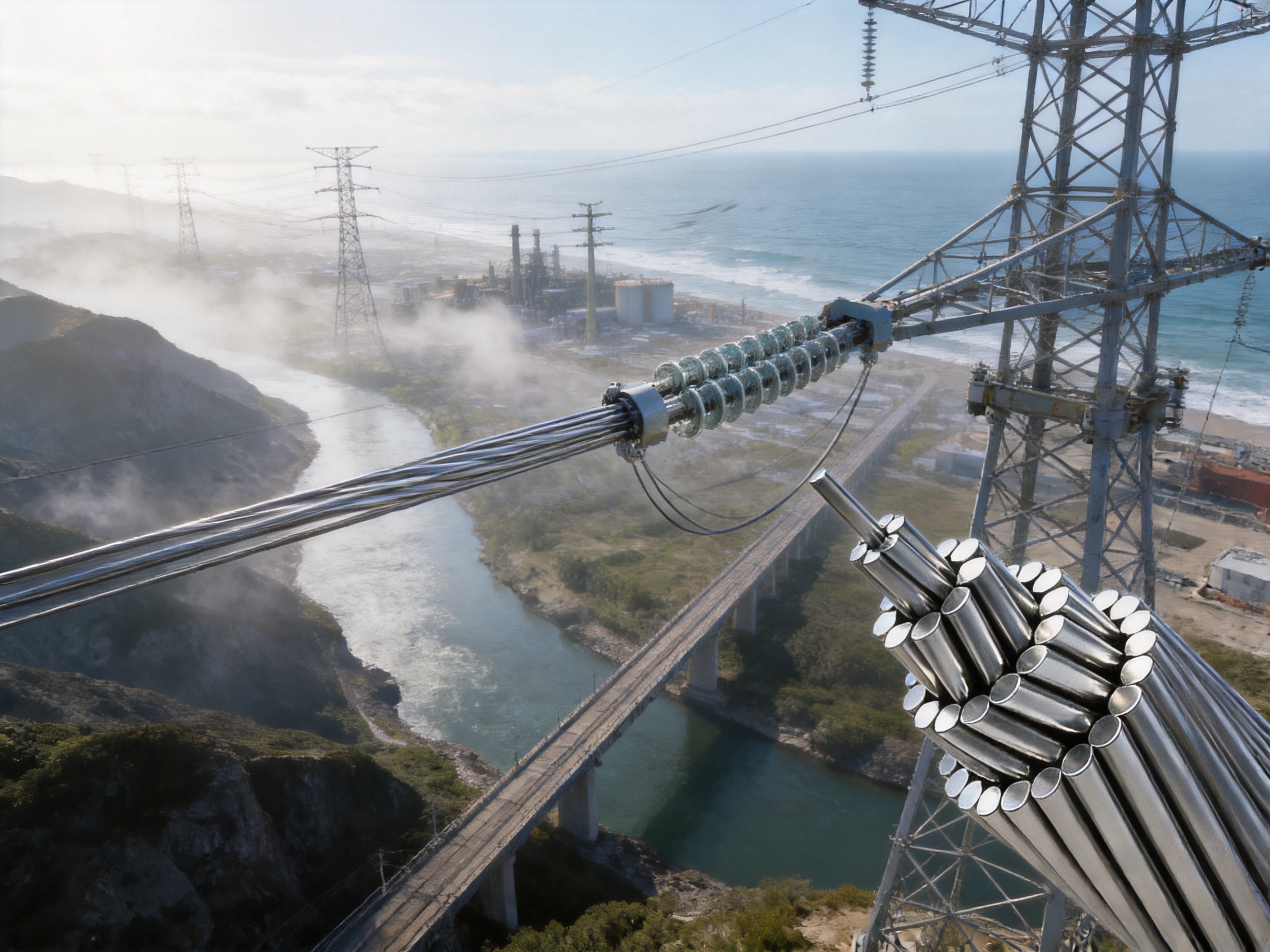
Overhead transmission and distribution networks depend on conductors that can carry electrical current efficiently while withstanding mechanical loads, weather exposure, installation tension, and long-term environmental stress. AAC, AAAC, and ACSR conductors are among the most widely used bare overhead conductors because they offer different combinations of conductivity, tensile strength, weight, corrosion resistance, and cost efficiency.
These conductor families are manufactured through concentric-lay stranding, a process that combines multiple wires into a stable circular formation. By selecting the appropriate aluminum grade, alloy composition, steel reinforcement, protective treatment, and cross-sectional area, utilities and engineering contractors can specify a conductor for almost any overhead line application, from compact urban distribution networks to high-voltage and ultra-high-voltage transmission corridors.
Wuxi Guanghuan Cable Co., Ltd. manufactures AAC, AAAC, ACSR, anticorrosive ACSR, aluminum-alloy-reinforced conductors, aluminum-clad steel-reinforced conductors, steel-stranded wires, and related bare conductor products. Its product range is designed for customers requiring stable electrical performance, verified mechanical properties, controlled dimensional accuracy, and dependable supply from an experienced cable manufacturer.
Understanding the Role of Bare Overhead Conductors
Bare overhead conductors form the electrical connection between generating stations, substations, distribution transformers, industrial facilities, and end-use networks. Unlike insulated cables, they are normally installed on insulators and supported by poles, towers, crossarms, or other overhead structures. Their exposed design enables efficient heat dissipation and reduces material use, but it also places demanding requirements on the conductor’s surface, mechanical strength, electrical resistance, and resistance to environmental conditions.
An overhead conductor must perform several functions at the same time. It must transmit the required current without excessive energy loss. It must support its own weight across the design span. It must withstand wind pressure, ice loading, vibration, and installation tension. It must maintain a stable shape when exposed to heating and cooling cycles. It must also remain compatible with fittings, clamps, vibration dampers, spacers, and other line hardware.
No single conductor construction is ideal for every project. AAC provides excellent conductivity and a relatively low cost for short-span applications. AAAC offers improved strength and creep performance compared with pure aluminum conductors. ACSR combines an aluminum current-carrying layer with a high-strength steel core, making it suitable for long spans, high mechanical loading, and major transmission routes.
This range of solutions allows engineers to balance line capacity, tower loading, span length, sag, installation conditions, environmental exposure, and total project cost. Selecting the right conductor is therefore an engineering decision rather than a simple choice based only on nominal cross-sectional area.
Product Families and Construction Principles
AAC: All Aluminum Conductor
AAC, identified in the supplied product range by the JL designation, is made entirely from hard-drawn aluminum wires. The wires are stranded concentrically around a central wire or arranged in successive layers to create a flexible, round, and electrically continuous conductor.
The main advantage of AAC is its high electrical conductivity relative to its weight. Because the conductor contains no steel core, its construction is simple, lightweight, and economical. It is particularly suitable for short spans where mechanical loading is moderate and where the supporting structures do not need to accommodate the high tensile forces associated with long-distance transmission lines.
AAC is commonly used in urban and rural distribution networks, substation connections, industrial power distribution, and other overhead installations where current-carrying performance is more important than maximum tensile strength. Its low weight can reduce the load imposed on poles and crossarms, which is valuable in areas with restricted structure capacity or limited installation space.
The primary limitation of AAC is that its mechanical strength is lower than that of steel-reinforced constructions. For long spans, heavy icing, high wind loading, or difficult crossings, an engineer may need to select AAAC or ACSR instead. Proper span design, sag calculation, and weather loading analysis are essential when specifying AAC.
AAAC: All Aluminum Alloy Conductor
AAAC, represented by JLHA1 and JLHA2 models in the product range, is manufactured with high-performance aluminum alloy wires. The alloy provides greater tensile strength than conventional hard-drawn aluminum while retaining strong electrical conductivity and a relatively low density.
The improved mechanical characteristics of AAAC make it an effective solution where AAC does not provide sufficient strength but a steel core is not desirable. AAAC has a favorable strength-to-weight ratio and can provide better resistance to creep, which is the gradual permanent elongation that may occur under sustained mechanical load and elevated operating temperature.
Because the entire conductor is made from aluminum alloy, AAAC can offer improved resistance to certain corrosion mechanisms compared with conductors containing exposed or inadequately protected steel components. It is often considered for coastal areas, industrial environments, urban networks, and lines where reducing magnetic effects or simplifying end-of-life material recovery is important.
AAAC is also useful when designers need to reduce conductor weight while maintaining a higher tensile rating than AAC. Lower conductor weight may help reduce tower and pole loading, especially when the line must be upgraded within an existing right-of-way. The final selection should still consider conductivity, operating temperature, span length, wind and ice conditions, and the required safety factor.
ACSR: Aluminum Conductor Steel Reinforced
ACSR, commonly designated JL/G1A, JL/G1B, JL/G2A, JL/G2B, or JL/G3A, combines a central core of galvanized steel wires with one or more concentric layers of aluminum wires. The steel core provides most of the mechanical tensile strength, while the surrounding aluminum wires carry the electrical current.
This division of functions makes ACSR one of the most widely used conductors for high-voltage and ultra-high-voltage overhead lines. The steel core enables the conductor to withstand high installation tension and significant longitudinal loading. The aluminum outer layers provide a large conductive surface, helping the conductor transmit power while maintaining a practical weight and diameter.
ACSR is particularly suitable for long spans, river crossings, deep valleys, mountainous routes, high-wind areas, and transmission corridors where high mechanical strength is essential. It can also be selected when a project requires a high rated tensile force without using a much larger all-aluminum conductor.
The design of ACSR can be adapted by changing the ratio between aluminum and steel. Conductors with a higher aluminum proportion emphasize current-carrying capacity, while designs with more steel provide greater tensile strength. Different steel grades, wire counts, layer arrangements, and aluminum diameters allow manufacturers to produce conductors for specific line requirements.
ACSR does require careful consideration of corrosion protection. Since the steel core is enclosed by aluminum layers but may still be exposed to moisture through interstices or damaged areas, anticorrosive designs are recommended for severe coastal, industrial, humid, or heavily polluted environments.
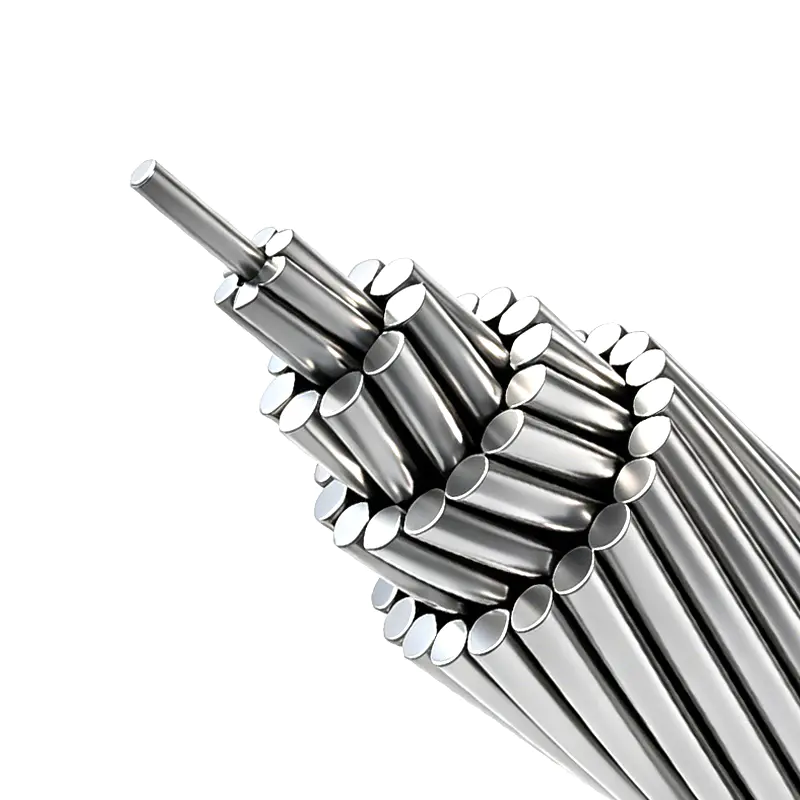
AAC, AAAC & ACSR - Aluminum and Aluminum Alloy Stranded Conductors
Comparison of AAC, AAAC and ACSR
The three principal conductor families share a common purpose but are optimized for different operating conditions. AAC prioritizes conductivity and economy. AAAC balances conductivity, mechanical strength, low weight, and corrosion performance. ACSR prioritizes high tensile strength and long-span capability.
Conductor type |
Primary material |
Main strength |
Typical application |
Key design consideration |
AAC / JL |
Hard-drawn aluminum wires |
High conductivity and low weight |
Short-span distribution and urban networks |
Lower tensile strength than reinforced designs |
AAAC / JLHA1 and JLHA2 |
Aluminum alloy wires |
Improved strength, creep resistance, and corrosion performance |
Distribution and medium-span transmission applications |
Alloy selection affects conductivity and tensile performance |
ACSR / JL/G series |
Aluminum wires over a galvanized steel core |
High tensile strength and long-span capability |
High-voltage, ultra-high-voltage, and special crossing projects |
Steel-core protection and correct aluminum-to-steel ratio |
Anticorrosive ACSR |
Aluminum wires, galvanized steel core, and protective grease |
Mechanical strength with improved environmental durability |
Coastal, industrial, polluted, and heavy-icing environments |
Protection method must match the exposure conditions |
Aluminum-alloy-reinforced conductor |
Aluminum conductor with aluminum alloy reinforcement |
Reduced weight and enhanced mechanical performance |
Special transmission and upgrade projects |
Requires detailed compatibility and line-design assessment |
In practical engineering, nominal cross-sectional area alone does not determine whether a conductor is suitable. The designer must review direct-current resistance, rated tensile force, calculated mass, overall diameter, aluminum and steel areas, thermal capacity, sag-tension behavior, and compatibility with existing line hardware.
Advantages Over Conventional and Competing Conductor Solutions
Effective Balance Between Conductivity and Strength
A major advantage of this product family is the ability to select a conductor according to the project’s actual electrical and mechanical priorities. AAC is an economical choice when high conductivity and low weight are required. AAAC provides additional strength without the need for a steel core. ACSR delivers a significantly higher mechanical rating for demanding transmission applications.
This range is more flexible than relying on one general-purpose conductor design. An engineering contractor can use different constructions within the same project portfolio, allowing the conductor to be matched to span length, voltage level, tower design, and environmental exposure.
Optimized Strength-to-Weight Performance
Conductors must be strong enough to withstand installation and service loads, but excessive weight increases the demands on poles, towers, foundations, and fittings. AAAC and ACSR provide different approaches to achieving a useful strength-to-weight ratio. AAAC relies on alloy technology, while ACSR uses a steel core to carry tensile loads.
This optimization can be especially valuable when upgrading an existing overhead line. A higher-capacity conductor may be installed without completely replacing every supporting structure, provided that the complete structural and thermal design is verified. Reduced weight can also simplify transportation, handling, and stringing operations.
Wide Range of Cross-Sectional Areas
The supplied range covers nominal cross-sectional areas from small distribution sizes to very large transmission conductors. AAC is available in the stated range of approximately 10 to 1000 square millimeters, while AAAC, ACSR, anticorrosive ACSR, and various reinforced derivatives are available from approximately 16 to 1000 square millimeters.
This broad range supports low-voltage and medium-voltage distribution, high-voltage transmission, substation connections, industrial networks, and major interregional power corridors. The availability of multiple construction families also enables more precise conductor selection than a limited catalog would allow.
Improved Environmental Adaptability
Overhead lines operate in environments that may include salt spray, industrial pollutants, high humidity, intense ultraviolet exposure, snow, ice, strong wind, and rapid temperature changes. The conductor design must account for these conditions throughout its expected service life.
Anticorrosive ACSR is available for severe environments. Protective grease can be applied within the gaps of the steel core or to appropriate conductor surfaces to create a physical barrier against moisture and corrosive contaminants. This treatment helps reduce the risk of corrosion-related deterioration in coastal areas, polluted industrial zones, and regions subject to heavy icing.
AAAC may also be attractive in environments where the use of an all-aluminum alloy construction provides useful corrosion and material-recovery characteristics. However, environmental suitability must always be evaluated through a complete project assessment rather than assumed from material name alone.
Stable Surface and Reduced High-Voltage Effects
A well-manufactured stranded conductor has a smooth, uniform outer surface. Consistent wire placement and controlled stranding help reduce irregularities that can contribute to corona activity, audible noise, electromagnetic interference, and localized electrical stress during high-voltage operation.
Surface quality is influenced by wire diameter control, lay length, tension management, die condition, alignment, and final inspection. These production details may appear small, but they can affect installation quality and long-term line behavior.
Efficient Installation and Maintenance
Concentric-lay stranded conductors are flexible enough for controlled stringing while retaining the dimensional stability required for compression fittings and other line hardware. Properly manufactured conductors can be handled efficiently with standard stringing equipment, tensioners, pullers, reels, and tension-stringing procedures.
Consistent diameter and lay geometry also assist with the installation of clamps, dead ends, splices, spacers, and vibration-control devices. Stable construction reduces the risk of abnormal deformation, birdcaging, loose wires, or fitting incompatibility when the conductor is handled according to the specified installation procedures.
Manufacturing Process and Quality Control
Raw Material Selection
Reliable overhead conductor performance begins with raw material control. Aluminum rod, aluminum alloy material, galvanized steel wire, aluminum-clad steel wire, and protective compounds must meet defined chemical, mechanical, and dimensional requirements before production begins.
For aluminum conductors, conductivity and tensile properties are closely connected to material composition and processing history. For AAAC, the alloy system and heat-treatment condition influence tensile strength, elongation, conductivity, and resistance to long-term deformation. For ACSR, the steel core must provide consistent tensile performance, coating quality, diameter, and flexibility.
Incoming inspection typically includes visual examination, dimensional measurement, electrical resistance checks, tensile testing, and verification of documentation. Materials that do not meet the approved requirements should be isolated before entering the production line.
Wire Drawing
Wire drawing reduces aluminum, alloy, or steel rod to the specified wire diameter through a series of dies. This operation requires precise control of reduction ratios, lubrication, line speed, cooling, and tension. Excessive deformation or poor lubrication can affect surface quality, dimensional consistency, and mechanical performance.
For aluminum and aluminum alloy wires, drawing conditions must be matched to the material’s hardness and target conductivity. For steel wires, the process must preserve the required tensile properties and maintain a smooth surface for galvanizing and subsequent stranding.
Heat Treatment and Material Conditioning
Depending on the conductor type and material grade, heat treatment or controlled material conditioning may be used to achieve the desired combination of strength, ductility, and electrical conductivity. The treatment must be uniform across the wire length to prevent variations in mechanical performance.
AAAC production is especially dependent on controlled alloy processing. The final product must provide the required strength without sacrificing conductivity beyond the specified limit. Consistent process parameters are therefore essential for maintaining uniformity between production batches.
Galvanizing and Protective Coatings
Steel wires used in ACSR are generally galvanized to improve resistance to atmospheric corrosion. The zinc coating must be continuous and sufficiently adherent to remain intact during handling, stranding, installation, and service.
For special applications, aluminum-clad steel wire may be selected instead of conventional galvanized steel wire. Aluminum-clad reinforcement can provide a different corrosion-resistance profile and may be suitable where environmental exposure or project specifications require it.
Anticorrosive ACSR may receive grease or another approved protective treatment. The treatment must be applied consistently so that the relevant gaps and surfaces are protected without interfering with stranding, dimensional control, electrical performance, or installation fittings.
Concentric-Lay Stranding
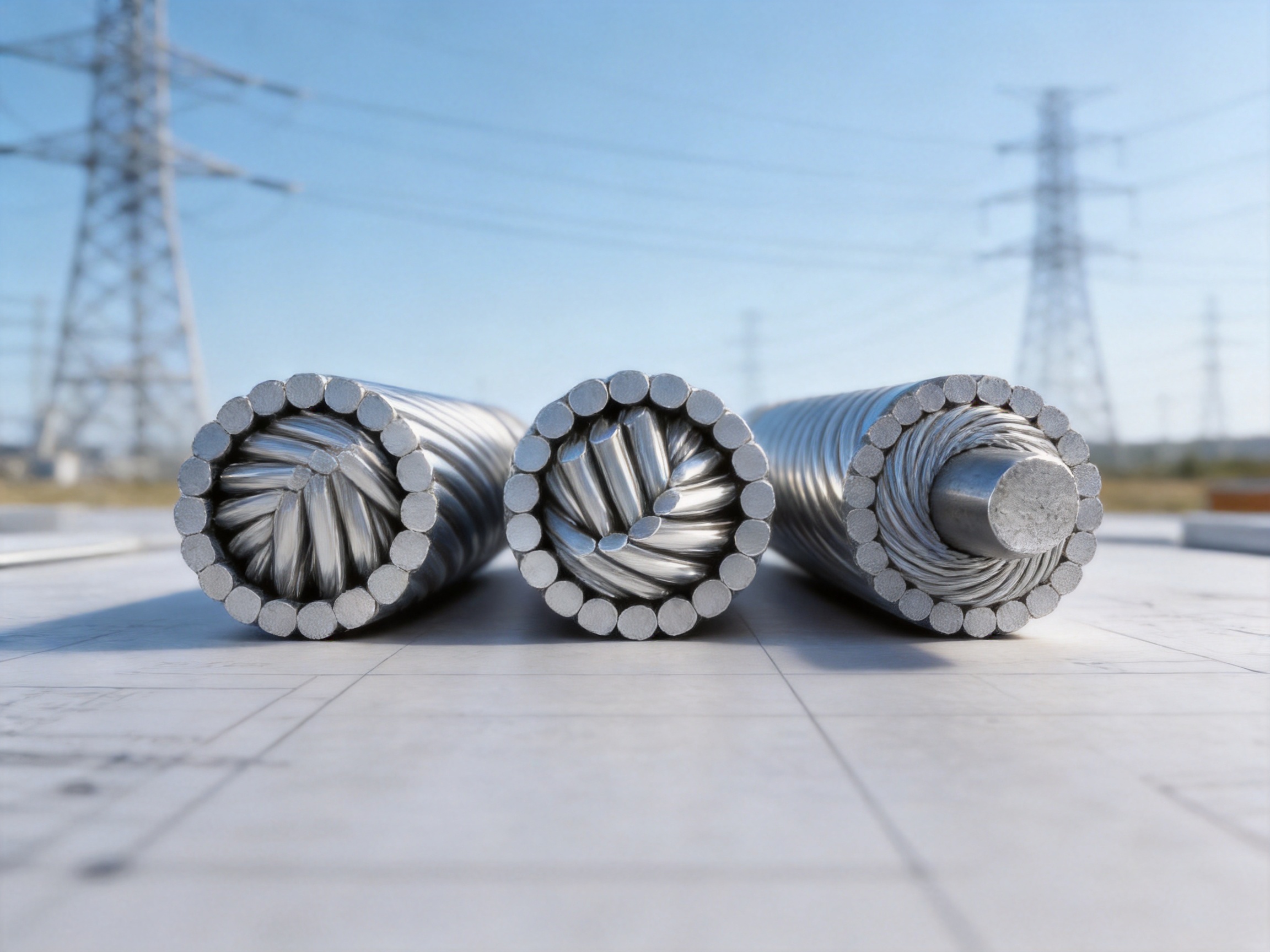
Stranding is the central operation in the manufacture of AAC, AAAC, and ACSR. Individual wires are arranged around a central wire or core in one or more layers. The wires follow a controlled helical path, creating a compact and stable conductor.
For ACSR, the steel core is first assembled and then surrounded by aluminum wires. The stranding sequence, lay direction, lay length, and tension of each layer must be controlled carefully. Improper tension can cause uneven loading, gaps, local deformation, or dimensional variation.
Modern stranding equipment is designed to maintain synchronized wire pay-off, stable line speed, controlled back tension, and accurate take-up. These controls help ensure that each conductor has consistent diameter, pitch, roundness, and surface appearance over its entire length.
Online Monitoring and Testing
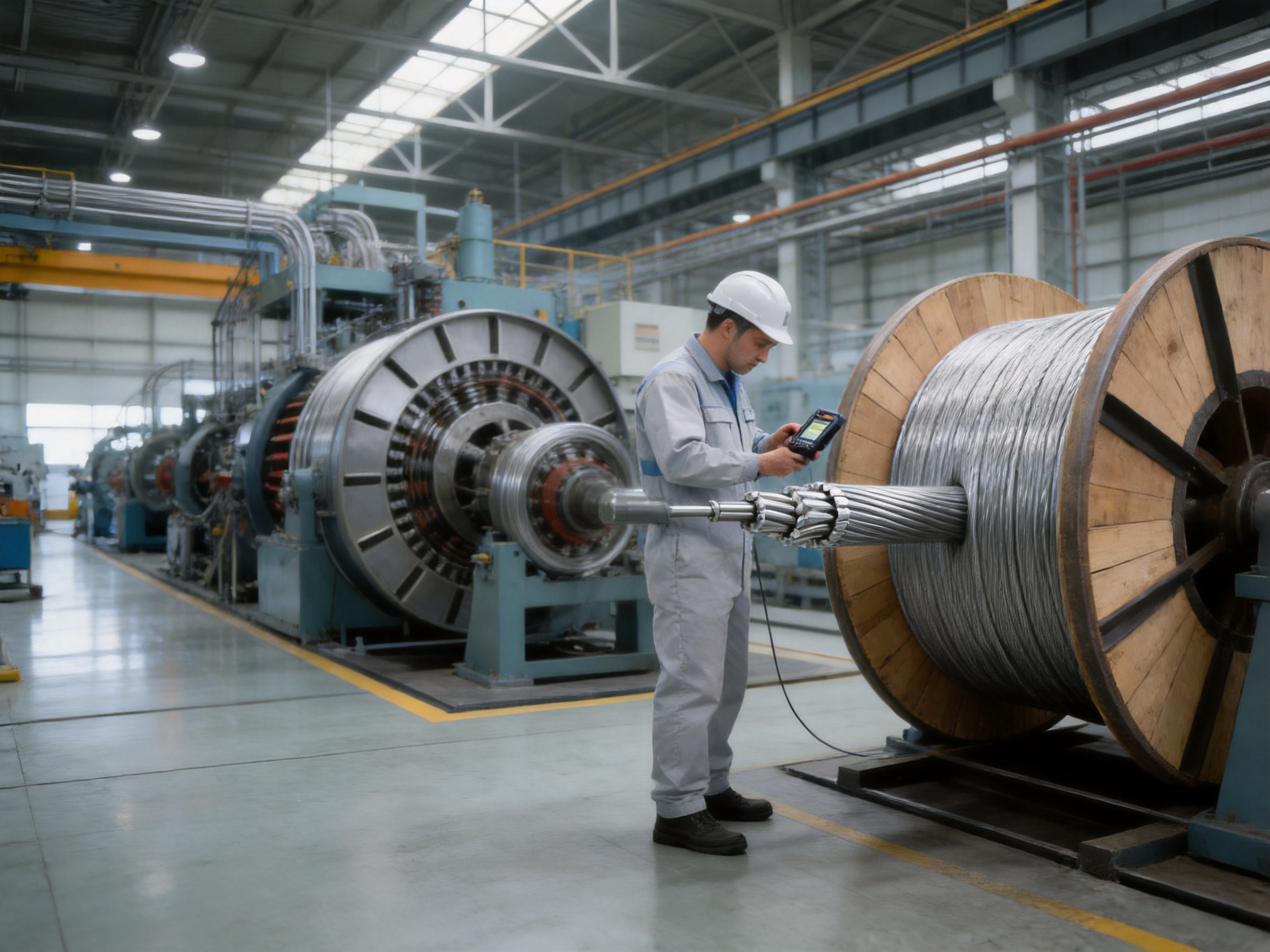
Advanced cable manufacturing requires quality control throughout production rather than only at the final inspection stage. Online monitoring equipment can identify dimensional variation, eccentricity, surface defects, tension abnormalities, and other process deviations at an early stage.
Wuxi Guanghuan Cable operates more than 70 production and testing lines and uses equipment such as online eccentricity monitoring systems, high-voltage series resonance testers, and partial discharge detection equipment across its broader cable manufacturing operations. While bare conductors do not have insulation systems requiring partial-discharge testing in the same way as insulated power cables, the presence of advanced testing infrastructure reflects the company’s overall approach to process control, measurement, and product verification.
Final Inspection and Product Release
Before shipment, conductors are checked against the applicable product standard, purchase specification, approved technical agreement, and customer requirements. Typical inspection items include conductor diameter, lay length, cross-sectional area, calculated mass, direct-current resistance, rated tensile force, wire count, wire diameter, surface condition, and reel packaging.
For ACSR, the aluminum and steel components must be evaluated separately as well as in the completed conductor. The steel core ratio, tensile rating, coating condition, and aluminum layer arrangement can affect the conductor’s overall performance. Test records and traceability documents support quality assurance and project acceptance.
Compliance with Standards and Technical Requirements
The product series is manufactured in accordance with GB/T 1179-2017, titled Round Wire Concentric Lay Overhead Electrical Stranded Conductors. This standard establishes requirements relating to conductor construction, materials, dimensions, resistance, mechanical properties, and other performance characteristics.
In addition to national standards, overhead conductors may be produced according to customer technical agreements, utility specifications, project-specific requirements, or relevant international standards. The applicable standard should be confirmed before quotation and production because different standards may use different designations, tolerances, calculation methods, tensile ratings, and acceptance criteria.
For international projects, buyers may request additional documentation such as material certificates, routine test reports, type-test evidence, inspection plans, packing specifications, factory acceptance test procedures, and certificates of conformity. An experienced manufacturer should be able to review these requirements at the technical clarification stage.
Applications Across Power Infrastructure
Urban Distribution Networks
Urban distribution systems often face strict limitations on pole loading, corridor width, visual impact, and construction access. AAC and AAAC can be suitable where spans are moderate and where a low-weight conductor helps control the load on existing structures.
AAAC may be selected when improved tensile strength or creep resistance is needed without adding a steel core. AAC may be preferred when the primary requirements are high conductivity, economical procurement, and compatibility with short-span distribution construction.
Rural Electrification
Rural lines frequently cross large areas with varying terrain and may require economical construction over moderate spans. AAC and AAAC provide flexible options for distribution feeders, agricultural networks, and local power supply routes.
The correct choice depends on pole spacing, local wind and ice conditions, current demand, future load growth, and the availability of maintenance resources. A conductor with a lower initial purchase price may not be the most economical solution if it requires heavier structures or frequent maintenance.
High-Voltage Transmission
High-voltage transmission lines require conductors with a suitable combination of current capacity, mechanical strength, corona performance, and long-term dimensional stability. ACSR is widely used because its steel core supports long spans and high installation tension while the aluminum layers provide the necessary conductive path.
For major transmission corridors, conductor selection also includes evaluation of bundle configuration, corona effects, radio interference, audible noise, thermal rating, sag, line losses, and hardware compatibility. ACSR designs can be adapted to meet different requirements by changing the aluminum-to-steel ratio and the overall cross-sectional area.
Ultra-High-Voltage Projects
Ultra-high-voltage lines require careful control of conductor surface characteristics and electrical field effects. Large cross-sectional areas, bundled conductors, smooth surfaces, and accurate installation are commonly used to manage corona and improve transmission efficiency.
The available large-size ACSR designs, including conductors with nominal areas extending toward and beyond 1000 square millimeters, can support high-capacity transmission applications when incorporated into a properly engineered line system.
River Crossings and Deep Valleys
Special crossing projects often involve unusually long spans, elevated clearance requirements, strong wind exposure, and difficult construction access. In these conditions, a high-strength conductor such as ACSR or an advanced reinforced derivative can provide the mechanical performance needed to maintain clearance and control sag.
Such projects require detailed structural calculations, installation planning, reel logistics, pulling-tension control, and inspection of every section. The conductor must be selected together with the towers, insulators, clamps, dampers, and crossing protection system.
Coastal and Industrial Areas
Salt spray and industrial pollution can accelerate corrosion of metallic components. Anticorrosive ACSR, aluminum-alloy conductors, or aluminum-clad steel-reinforced designs may be considered depending on the environment and the project’s service-life expectations.
Environmental protection should not be viewed as a coating decision alone. The complete system should be evaluated, including fittings, clamps, tower grounding, drainage, inspection intervals, and the possibility of contamination deposits on the conductor surface.
Representative Product Range
The manufacturer’s overhead conductor portfolio includes the following product families and approximate nominal cross-sectional ranges. Final dimensions and performance values should be confirmed against the selected standard and technical agreement.
Model designation |
Product name |
Approximate nominal area |
Typical purpose |
JL |
AAC |
10–1000 square millimeters |
Economical, high-conductivity distribution |
JLHA1, JLHA2 |
AAAC |
16–1000 square millimeters |
Alloy conductor with enhanced mechanical performance |
JL/G1A, JL/G1B, JL/G2A, JL/G2B, JL/G3A |
ACSR |
16–1000 square millimeters |
High-strength transmission and long spans |
JL/G1AF, JL/G2AF, JL/G3AF |
Anticorrosive ACSR |
16–1000 square millimeters |
Coastal, industrial, polluted, or icing environments |
JLHA2/G1A, JLHA2/G1B, JLHA2/G3A |
Aluminum-alloy conductor steel-reinforced |
16–1000 square millimeters |
Higher-strength alloy transmission construction |
JLHA1/G1A, JLHA1/G1B, JLHA1/G3A |
Aluminum-alloy conductor steel-reinforced |
16–1000 square millimeters |
Alternative alloy and reinforcement combinations |
JL/LHA2, JL/LHA1 |
Aluminum conductor aluminum-alloy reinforced |
16–1000 square millimeters |
Lightweight reinforced conductor solutions |
JL/LB20A |
Aluminum conductor aluminum-clad steel-reinforced |
16–1000 square millimeters |
Reinforced conductors for demanding environments |
JLB20A, JLB20B |
Aluminum-clad steel stranded wire |
4–200 square millimeters |
Reinforcement and grounding-related applications |
JG1A, JG1B, JG2A, JG3A |
Steel-stranded wire |
4–63 square millimeters |
Mechanical reinforcement and related overhead applications |
Company Manufacturing Strengths
Wuxi Guanghuan Cable Co., Ltd. was founded in 1998 and is based in Guanlin Town, Yixing City, Jiangsu Province, a major cable manufacturing center in China. The company has registered capital of RMB 400.8 million and operates across more than 100,000 square meters, including more than 45,000 square meters of building area.
The company operates more than 70 advanced production and testing lines and employs more than 140 people, including over 30 technical professionals. Its scale supports production across power cables, electrical equipment wires and cables, bare conductors, overhead insulated cables, railway and urban rail transit cables, and cables for energy storage, photovoltaic, and wind power applications.
Its registered Liguang brand portfolio includes more than 100 product categories and over 30,000 specifications. This breadth is valuable for customers that need more than one cable type for a complete electrical infrastructure project. It also supports technical coordination between overhead conductors, power cables, equipment wires, and renewable-energy cable systems.
The company reports annual sales revenue of approximately RMB 2 billion and annual output value exceeding RMB 3 billion. These capabilities indicate an established manufacturing platform capable of supporting both standard products and customized technical requirements, subject to project review and production scheduling.
Quality and management certifications include ISO 9001, ISO 14001, ISO 45001, ISO 50001, GB/T 29490, a green management system, a social responsibility management system, and an after-sales service management system. Product-related credentials include CCC, TÜV, product carbon footprint, and China Energy-Saving and Environmentally Friendly Product certifications.
The company has also completed qualification and capability verification for power cables and conductors conducted by the State Grid Corporation of China. Such verification is relevant to customers evaluating supplier capability, quality systems, technical resources, and manufacturing reliability for power infrastructure projects.
How to Select the Correct Conductor
Define the Electrical Requirement
Begin with the required continuous current, emergency loading, operating voltage, short-circuit conditions, allowable temperature, and acceptable resistance. The conductor’s direct-current resistance at 20 degrees Celsius is an important reference value, but the complete thermal design must also consider ambient temperature, solar radiation, wind speed, emissivity, and installation geometry.
Evaluate Span and Mechanical Loading
Span length, elevation difference, wind pressure, ice thickness, conductor weight, installation tension, and required ground clearance all influence conductor selection. AAC may be adequate for short spans, while AAAC or ACSR may be more appropriate for longer spans or higher mechanical loads.
Review Environmental Exposure
Projects near coastlines, chemical plants, industrial facilities, or regions with persistent humidity should consider corrosion protection. Heavy icing and high wind may require a conductor with a higher tensile rating. Areas with frequent vibration or difficult terrain may require additional attention to conductor construction and vibration-control design.
Check Existing Infrastructure
For replacement or capacity-upgrade projects, the conductor must be compatible with existing towers, poles, insulators, fittings, grounding arrangements, and clearances. A larger conductor may improve capacity but increase weight, diameter, wind load, or fitting requirements. These effects should be verified through a complete engineering review.
Confirm Standard and Documentation
The buyer should specify the governing standard, conductor designation, nominal area, wire count, aluminum and steel grades, rated tensile force, resistance, packaging, length tolerance, inspection requirements, and documentation. Early clarification helps prevent differences between catalog terminology and project specifications.
Installation and Service Considerations
Conductors should be transported and stored on suitable reels with protection against impact, moisture, contamination, and flange damage. Reel handling must prevent dragging or uncontrolled rolling. Damaged reels can cause conductor deformation before installation begins.
During stringing, the conductor should be kept clear of the ground and other abrasive surfaces. Pulling tension, sag, running-board selection, swivel use, and tensioner setup should follow the approved installation plan. Excessive tension, sharp bending, or uncontrolled contact with hardware can damage the outer aluminum wires or disturb the conductor geometry.
Compression fittings and dead-end assemblies must match the specific conductor construction. ACSR fittings are not automatically interchangeable with AAC or AAAC fittings, and reinforced derivatives may require dedicated hardware. Installation crews should verify conductor designation, diameter, wire arrangement, and fitting compatibility before assembly.
After installation, inspection should check for broken wires, birdcaging, strand displacement, abnormal surface damage, incorrect sag, loose fittings, and inadequate clearances. In areas subject to wind-induced vibration, appropriate dampers should be installed according to the line design.
Q&A
What is the main difference between AAC, AAAC, and ACSR?
AAC is made entirely from hard-drawn aluminum and emphasizes conductivity and economy. AAAC is made from aluminum alloy and provides improved strength and creep resistance. ACSR combines aluminum wires with a galvanized steel core and is designed for high tensile strength and long spans.
Which conductor is best for a short-span urban distribution line?
AAC is often suitable when the span is short, mechanical loading is moderate, and high conductivity and low cost are priorities. AAAC may be preferred when additional tensile strength, improved creep performance, or greater environmental resistance is required.
Why is ACSR widely used for transmission lines?
ACSR separates the electrical and mechanical functions of the conductor. Aluminum wires carry current, while the steel core supplies high tensile strength. This construction supports long spans, high installation tension, and demanding wind or ice loading.
What is anticorrosive ACSR?
Anticorrosive ACSR is a steel-reinforced aluminum conductor with protective grease or another approved treatment applied to relevant internal gaps or surfaces. It is intended to improve resistance to moisture and corrosion in coastal, industrial, polluted, or heavily iced environments.
Does a larger cross-sectional area always provide better performance?
Not necessarily. A larger area can reduce electrical resistance and increase current capacity, but it may also increase weight, wind loading, cost, and structural requirements. The correct conductor must be selected through both electrical and mechanical calculations.
What standard applies to this conductor series?
The product information identifies GB/T 1179-2017, Round Wire Concentric Lay Overhead Electrical Stranded Conductors, as the national standard for the series. Customer-specific technical agreements and relevant international standards may also apply.
Can these conductors be customized?
Conductor designs can be selected or developed according to nominal area, aluminum-to-steel ratio, alloy type, corrosion-protection requirement, wire arrangement, tensile rating, resistance, packaging, and applicable standard. Technical confirmation should be completed before production.
What information should be included in an inquiry?
An inquiry should identify the conductor type, nominal cross-sectional area, voltage level, span length, environmental conditions, required standard, rated tensile force, resistance requirement, delivery length, reel specification, inspection documents, and destination. A line drawing or technical specification is helpful for nonstandard projects.
Why is manufacturer process control important for stranded conductors?
Variation in wire diameter, lay length, tension, surface condition, or core alignment can affect resistance, tensile performance, fitting compatibility, and installation behavior. Controlled drawing, stranding, coating, online monitoring, and final testing help ensure consistent conductor quality.
Conclusion
AAC, AAAC, and ACSR provide a practical range of solutions for modern overhead power networks. AAC offers high conductivity and economical performance for short-span distribution. AAAC combines low weight with improved mechanical strength and creep resistance. ACSR provides the tensile capacity required for long spans, high-voltage transmission, and difficult crossing projects.
Additional constructions, including anticorrosive ACSR, aluminum-alloy conductor steel-reinforced products, aluminum-alloy-reinforced conductors, and aluminum-clad steel-reinforced conductors, expand the range for demanding environmental and structural conditions.
The performance of any conductor depends not only on its basic material designation but also on wire quality, dimensional control, stranding accuracy, corrosion protection, testing, packaging, and installation. Wuxi Guanghuan Cable combines a broad product portfolio with large-scale production resources, advanced testing capability, multiple management certifications, and experience in power and energy cable manufacturing.
For utilities, engineering contractors, distributors, and infrastructure developers, the most reliable procurement approach is to match the conductor construction to the complete line design. When electrical capacity, mechanical loading, environmental exposure, standards, and installation requirements are evaluated together, AAC, AAAC, and ACSR can provide durable and efficient foundations for overhead transmission and distribution systems.
References
GB/T 1179-2017, Round Wire Concentric Lay Overhead Electrical Stranded Conductors.
International technical practices for aluminum conductors, aluminum alloy conductors, and aluminum conductors steel reinforced.
Wuxi Guanghuan Cable Co., Ltd., product information for AAC, AAAC, ACSR, anticorrosive ACSR, and related bare overhead conductors.
Power transmission and distribution engineering principles for conductor selection, sag-tension calculation, thermal rating, and overhead line design.
Manufacturer quality-management and environmental-management documentation relating to cable production, inspection, testing, and customer service.
Product: AAC, AAAC & ACSR - Aluminum and Aluminum Alloy Stranded Conductors


Copyright © Wuxi Guanghuan Cable Co., Ltd. All Rights Reserved. Power Cables Manufacturer Electrical Wire And Cable Factory

