


 English
 中文简体
 русский
 Español
 عربى

Computer and Instrument Shielded Cable for Reliable Industrial Signal Transmission
Content
- 1 1. The Role of Shielded Cable in Industrial Automation
- 2 2. Construction Features of Computer and Instrument Shielded Cable
- 3 3. Main Performance Advantages
- 4 4. Comparison with Ordinary Unshielded Cable
- 5 5. Manufacturing Strength of Wuxi Guanghuan Cable Co., Ltd.
- 6 6. Quality Management and Certification Foundation
- 7 7. Manufacturing Process for Signal Cable Reliability
- 8 8. Product Advantages for International and Industrial Buyers
- 9 9. Selecting the Correct Cable for a Project
- 10 10. Installation and Maintenance Recommendations
- 11 11. Quality Assurance from Production to Delivery
- 12 12. Sustainability and Responsible Manufacturing
- 13 13. Why This Product Is a Practical Choice
- 14 14. Frequently Asked Questions
- 14.1 Q1: What is computer and instrument shielded cable used for?
- 14.2 Q2: What is the main advantage of the shielding layer?
- 14.3 Q3: Can shielded cable eliminate all electrical noise?
- 14.4 Q4: How is shielded cable different from ordinary unshielded cable?
- 14.5 Q5: What information should be provided when requesting a quotation?
- 14.6 Q6: Is this product suitable for every industrial application?
- 14.7 Q7: Why is manufacturing consistency important for shielded cable?
- 14.8 Q8: What testing capabilities does the manufacturer have?
- 14.9 Q9: Does the company manufacture other cable products?
- 14.10 Q10: How should the cable shield be grounded?
- 14.11 Q11: What certifications does the manufacturer hold?
- 14.12 Q12: How can customers obtain technical assistance?
- 15 Conclusion
- 16 References
- 17 Product: Computer and Instrument Shielded Cable
Modern industrial facilities depend on accurate communication between computers, instruments, controllers, sensors, and automation equipment. Every measurement, command, alarm, and feedback signal must travel through a cable system that can preserve information accurately from the field device to the control room. When electrical noise, electromagnetic interference, mechanical stress, or poor cable construction affects that transmission path, the result may be unstable control, incorrect readings, unnecessary equipment shutdowns, and higher maintenance costs.
Computer and instrument shielded cable is designed specifically for this demanding signal-transmission environment. Unlike ordinary low-voltage wiring, it combines carefully arranged conductors with shielding structures that help reduce the influence of electromagnetic interference. The cable is intended for electronic computers, electrical instruments, automation devices, industrial automatic control systems, and detection distribution units. Its principal role is to connect computer systems with instrumentation while helping maintain the integrity and accuracy of transmitted signals.
Wuxi Guanghuan Cable Co., Ltd. manufactures computer and instrument shielded cables as part of its electrical equipment cable portfolio. With a manufacturing history beginning in 1998, the company combines large-scale production capacity, technical personnel, systematic quality management, and advanced testing equipment to serve industrial customers requiring dependable cable solutions.
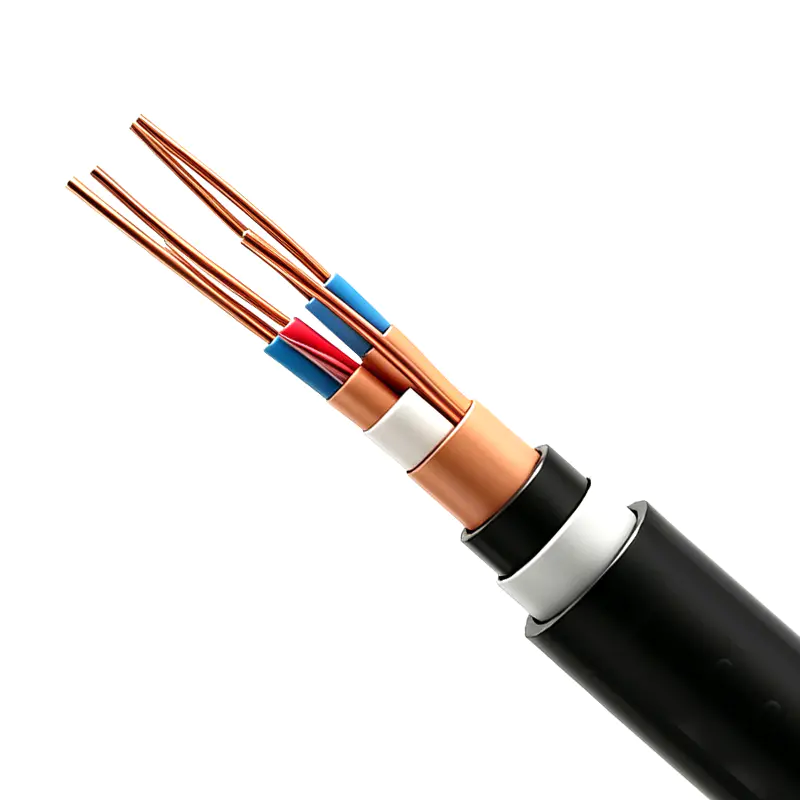
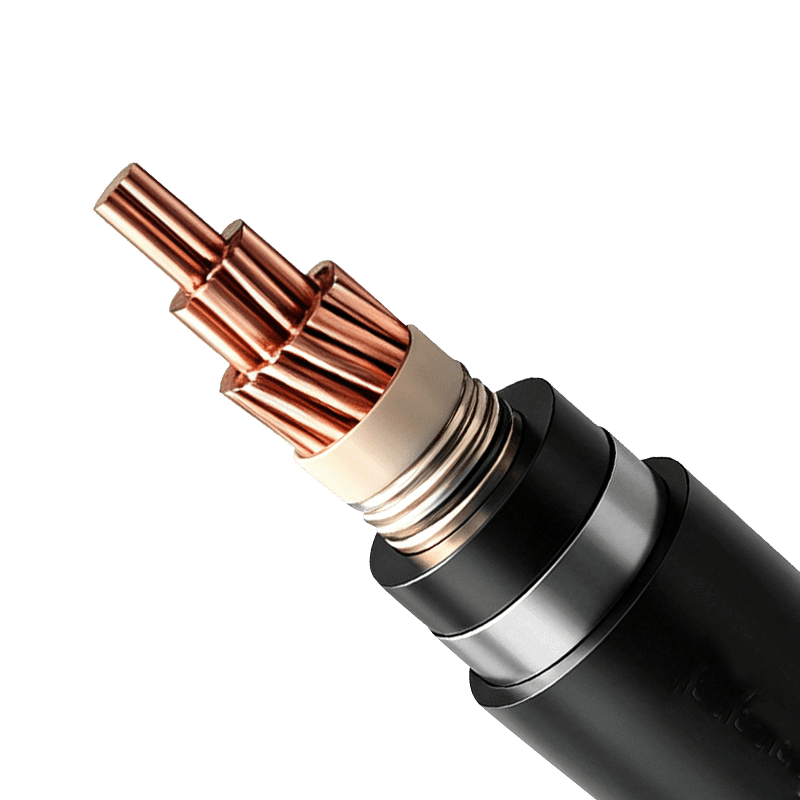
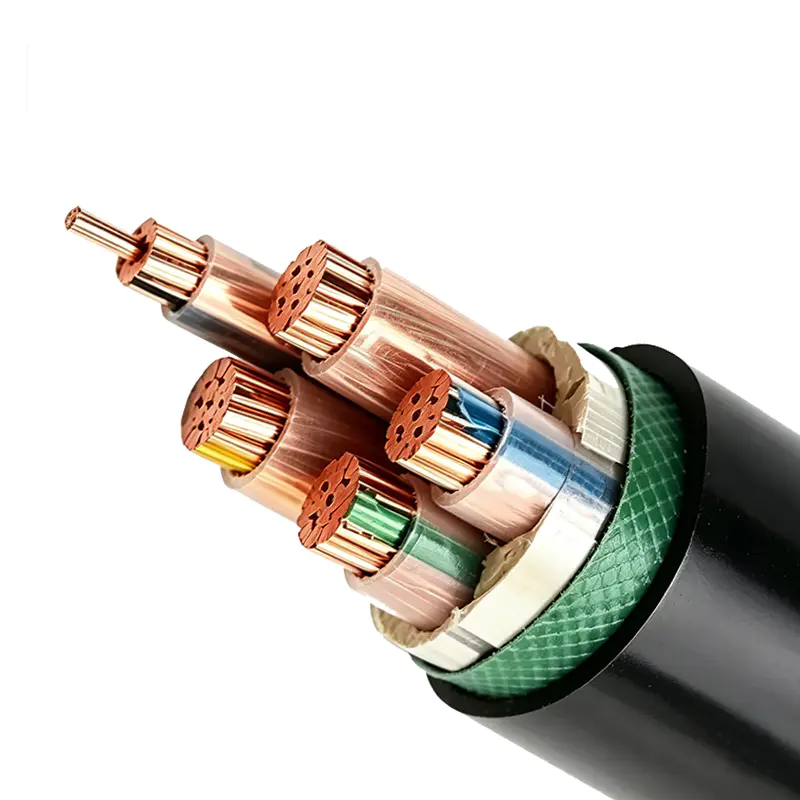
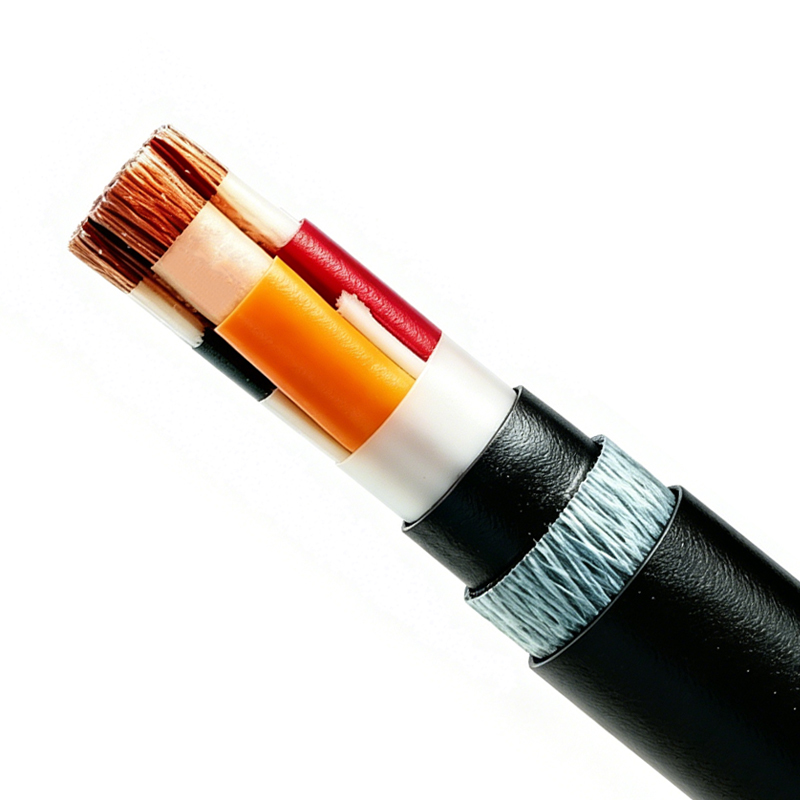
Computer and Instrument Shielded Cable
1. The Role of Shielded Cable in Industrial Automation
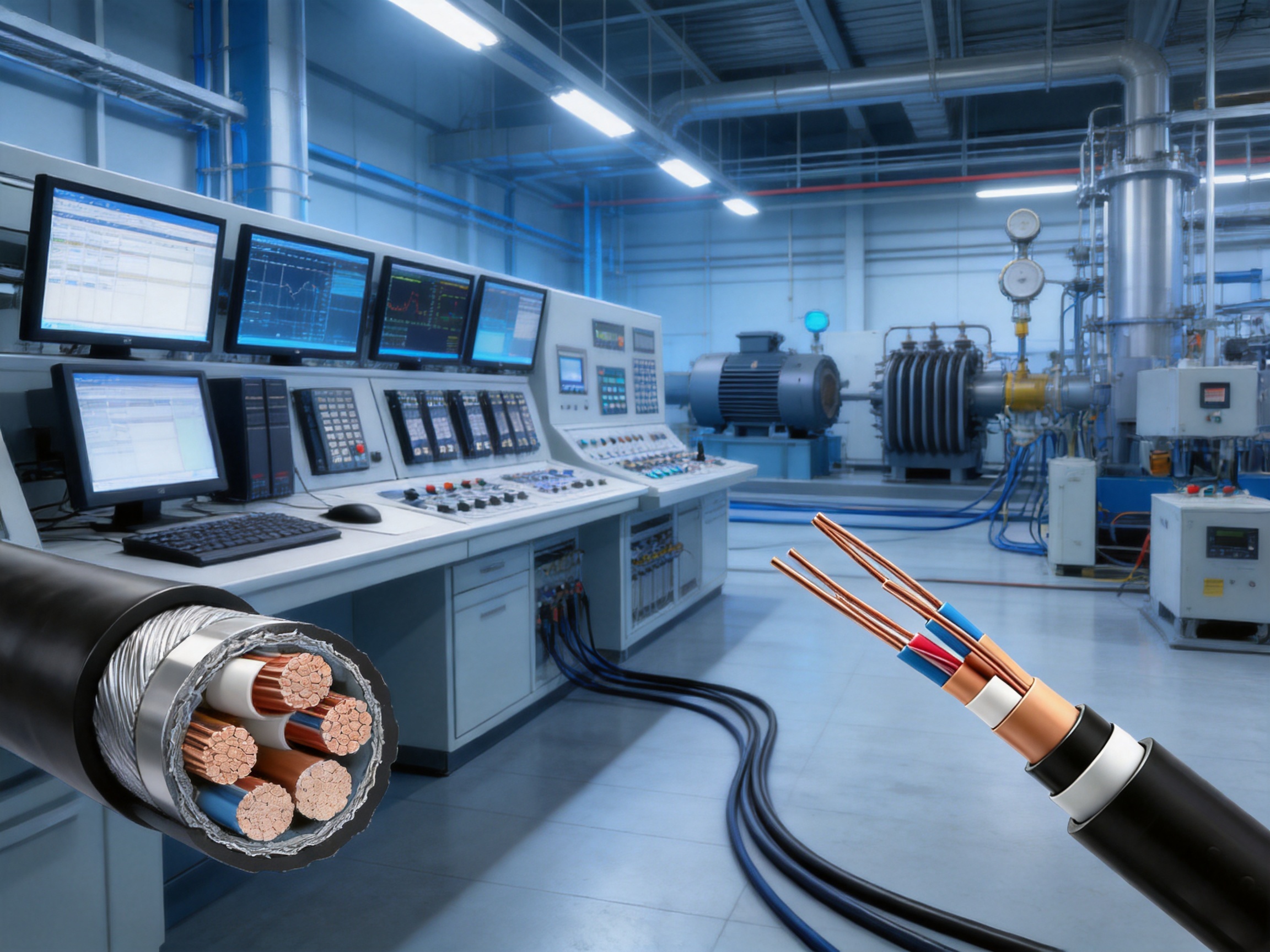
Industrial automation systems are made up of many interconnected devices. A typical installation may include programmable control equipment, computers, distributed control units, temperature sensors, pressure transmitters, flow meters, analytical instruments, motor control equipment, alarm systems, and data acquisition units. These devices exchange low-level electrical signals over cable routes that may pass near power cables, motors, transformers, switching equipment, variable-frequency drives, and other sources of electrical noise.
Signal cables are particularly sensitive because the information they carry may be relatively small in voltage or current compared with the energy present in nearby power circuits. An unwanted electrical signal introduced into a measurement cable can distort the original signal. Depending on the application, this interference may appear as fluctuating readings, communication errors, false alarms, unstable control loops, or unexplained differences between field measurements and control-room displays.
Shielded cable addresses this challenge through a conductive shielding layer placed around the insulated conductors or conductor groups. The shield creates a controlled barrier that helps reduce the coupling of external electromagnetic energy into the signal circuit. Proper installation, grounding, routing, and termination remain essential, but the cable’s design provides the foundation for a more reliable signal-transmission system.
Computer and instrument shielded cables are therefore not simply ordinary wires with an additional metallic layer. They are engineered as complete signal-transmission products. The conductor arrangement, insulation system, shielding configuration, filling materials, bedding, outer protection, and manufacturing tolerances all influence the cable’s performance. A well-designed construction helps preserve electrical separation between circuits and supports consistent operation in complex industrial environments.
1.1 Typical Applications
The product is suitable for connecting computers and instruments in industrial automatic control systems. It can be considered for signal circuits associated with detection distribution units, automation equipment, electronic computers, industrial instrumentation, and related low-voltage control or monitoring installations.
Potential application areas include process plants, manufacturing lines, utility facilities, energy projects, water treatment systems, transportation infrastructure, building automation systems, and equipment rooms where measurement signals and control information must be transmitted reliably. The precise cable construction should be selected according to the electrical, environmental, mechanical, and installation requirements of each project.
In a process-control application, for example, the cable may connect a field transmitter to an input module. In a production line, it may connect sensors and instruments to a programmable controller or industrial computer. In a monitoring system, it may carry signals from detection equipment to a centralized data-acquisition unit. In each case, signal accuracy and resistance to interference are central considerations.
1.2 Why Signal Integrity Matters
Signal integrity means that the information received at the destination remains sufficiently faithful to the information generated at the source. A cable cannot correct every problem in a system, but it can reduce one of the most common causes of signal degradation: unwanted electromagnetic coupling.
Maintaining signal integrity can improve the stability of automated processes, reduce nuisance alarms, support accurate data collection, and lower the risk of unnecessary troubleshooting. It can also help engineers identify genuine process changes rather than reacting to electrical noise. For facilities operating continuously, this reliability may contribute to reduced downtime and better operational visibility.
2. Construction Features of Computer and Instrument Shielded Cable
The exact construction of a computer and instrument shielded cable depends on the required number of pairs or cores, conductor size, insulation material, shielding method, environmental conditions, and project specifications. Nevertheless, the main design objective remains consistent: provide an organized and protected path for low-voltage signals.
2.1 Conductors for Signal Transmission
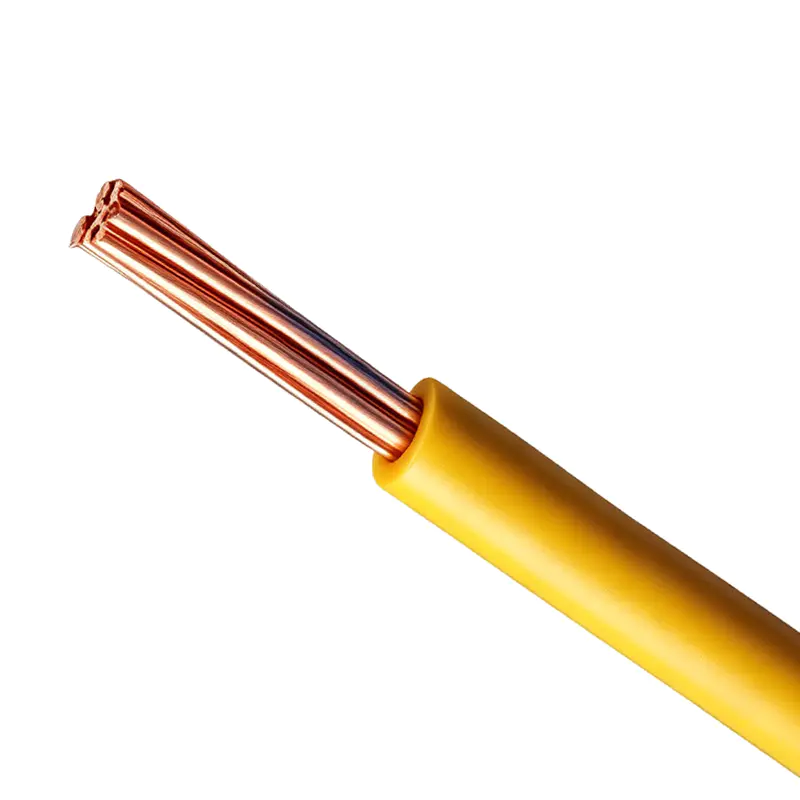
The conductors form the electrical path between the instrument, computer, controller, or distribution unit. Conductor selection affects resistance, signal loss, flexibility, termination performance, and compatibility with connected equipment. In multi-core or multi-pair configurations, consistent conductor dimensions and careful stranding help create predictable electrical characteristics throughout the cable length.
For instrumentation systems, conductor identification is also important. Clear color coding, numbering, or pair identification allows installers and maintenance personnel to trace circuits efficiently. Good identification reduces the possibility of wiring errors, especially in projects containing hundreds or thousands of control and measurement connections.
2.2 Insulation and Circuit Separation
Insulation separates individual conductors electrically and protects them from unintended contact. In a computer or instrument cable, insulation must support stable signal transmission while also withstanding the expected operating environment. Its performance contributes to dielectric strength, resistance between circuits, and safe handling during installation.
In cables containing multiple pairs or groups, the internal arrangement may help limit mutual interference between adjacent circuits. Separating circuits according to their function can be beneficial when several signal types share a common cable route. The design should also permit orderly termination at terminal blocks, instruments, control panels, and electronic equipment.
2.3 Shielding Structures
The shielding system is the defining feature of this product category. Depending on the cable design and application, shielding may be arranged around individual pairs, groups of conductors, or the complete cable assembly. The purpose is to reduce the impact of external electromagnetic fields and to limit unwanted interaction between internal circuits.
A shield must be continuous enough to provide effective coverage along the cable length. Manufacturing precision is important because gaps, irregularities, or inconsistent contact may weaken the intended shielding effect. The shield must also be compatible with the project’s grounding and bonding method. A technically advanced cable still requires appropriate installation practices to deliver its full benefit.
Different industrial environments create different interference conditions. A cable near high-power motors may face a different electromagnetic environment from a cable installed in a quiet instrumentation room. For this reason, the selection of shield type, coverage, grounding arrangement, and overall cable construction should be made with the assistance of the project engineer or cable supplier.
2.4 Outer Protection
The outer layer protects the internal cable components during transport, installation, and service. It helps resist routine abrasion, contact with surrounding materials, and environmental exposure within the specified application range. The outer sheath also keeps the cable assembly together and provides a practical surface for identification markings.
Where cables are installed in industrial areas, the outer protection must be considered together with the installation method. Cables in trays, conduits, control cabinets, underground routes, or equipment connections may experience different levels of bending, pulling, moisture, dust, and mechanical contact. Selecting a construction appropriate for the route helps preserve service life.
3. Main Performance Advantages
Computer and instrument shielded cable offers several important advantages over ordinary unshielded signal wiring when used in environments exposed to electromagnetic interference. These advantages come from the combination of electrical design, controlled manufacturing, and application-specific selection.
3.1 Improved Resistance to Electromagnetic Interference
The primary advantage is the ability to reduce the influence of electromagnetic interference on transmitted signals. Industrial facilities contain many potential interference sources, including motors, generators, transformers, contactors, power converters, switching devices, and parallel power circuits. Shielding helps limit the amount of unwanted energy coupled into the signal conductors.
Improved interference resistance can support more stable readings and fewer communication disturbances. It is especially valuable where measurement signals are weak, control decisions depend on small changes, or multiple electronic systems operate in close proximity.
3.2 Better Signal Accuracy
Signal accuracy is essential for process control, monitoring, and data collection. When interference is reduced, the receiving instrument has a better opportunity to interpret the transmitted signal correctly. This can support more dependable temperature, pressure, flow, level, analytical, and equipment-status information.
The cable itself is one part of the complete measurement chain. Sensors, transmitters, connectors, terminal blocks, grounding systems, input modules, and software must also be correctly designed and maintained. However, using a cable purpose-built for instrument and computer signals eliminates an avoidable weakness in the physical communication path.
3.3 Stable Operation in Complex Industrial Systems
Industrial systems often combine high-power circuits and low-level control circuits within the same facility. They may also operate continuously under changing loads. A shielded cable provides an additional level of protection for signal circuits in this complex environment.
Compared with general-purpose wiring, the product is more closely aligned with the requirements of automation and instrumentation. Its design recognizes that a cable carrying measurement information is not interchangeable with a cable intended only to deliver power. This application-specific approach may help engineers achieve a more stable overall system.
3.4 Organized Multi-Circuit Installation
Computer and instrument cables are commonly required in multi-core or multi-pair configurations. These designs allow several related signals to be routed together while maintaining circuit identification and internal organization. A well-constructed cable can simplify panel wiring, reduce the number of separate cable runs, and make installation documentation easier to manage.
Organized cable construction can also support maintenance. When circuits are clearly identified and grouped, technicians can trace signals more quickly, isolate faults, and perform modifications with less disruption to adjacent systems.
3.5 Support for Long-Term Maintenance
The value of an industrial cable extends beyond its initial installation. Cables may remain in service for many years, during which time equipment is upgraded, instruments are recalibrated, and control strategies are changed. A product manufactured with consistent dimensions, reliable identification, and stable construction can make future maintenance more manageable.
Consistent production is particularly important when a project requires multiple batches or additional cable lengths at a later stage. Uniformity between production runs helps engineering teams maintain compatible installation and termination practices.
4. Comparison with Ordinary Unshielded Cable
Ordinary unshielded cable may be adequate in electrically quiet locations or for applications that are not sensitive to interference. However, it may provide limited protection when routed close to power equipment or used for low-level instrumentation signals. Selecting an unshielded product solely on the basis of initial purchase cost can create additional expenses if noise-related problems appear after commissioning.
Computer and instrument shielded cable is designed with the interference problem in mind from the beginning. The shield adds construction complexity, but that complexity serves a practical purpose. It can help protect signal quality, reduce troubleshooting, and improve confidence in the readings delivered to the control system.
| Consideration | Ordinary Unshielded Signal Cable | Computer and Instrument Shielded Cable |
|---|---|---|
| Electromagnetic interference protection | Limited protection against external electrical noise | Conductive shielding helps reduce electromagnetic coupling |
| Suitability for industrial instrumentation | Depends strongly on the installation environment | Designed specifically for computer, instrument, and automation signal connections |
| Signal stability near power equipment | May be more vulnerable to interference | Better suited to applications where electromagnetic noise is a concern |
| Internal circuit organization | May vary according to general-purpose construction | Designed for organized multi-core or multi-pair signal transmission |
| Application focus | General wiring and less demanding signal routes | Industrial control, detection, instrumentation, and computer connections |
| Project value | May have a lower initial cost but can require additional corrective work | Supports a more complete approach to signal reliability and system maintenance |
This comparison does not mean that a shielded cable is required for every low-voltage circuit. Correct engineering requires consideration of the signal type, route, surrounding equipment, installation method, grounding arrangement, environmental conditions, and applicable project standards. Nevertheless, when electromagnetic interference is a credible risk, a purpose-designed shielded cable offers a stronger technical foundation than basic unshielded wiring.
5. Manufacturing Strength of Wuxi Guanghuan Cable Co., Ltd.
Product performance depends not only on the cable design but also on the manufacturer’s ability to produce that design consistently. Wuxi Guanghuan Cable Co., Ltd. was founded in 1998 and is headquartered in Guanlin Town, Yixing City, Jiangsu Province, an area recognized as the Cable Capital of China. The company operates as a large cable manufacturer serving power, industrial, infrastructure, and energy-related markets.
The company covers more than 100,000 square meters, including over 45,000 square meters of building area. It operates more than 70 advanced production and testing lines. This scale provides the capacity needed to manage diverse product categories, different conductor configurations, and varying project requirements while maintaining organized manufacturing operations.
The workforce includes more than 140 employees, including over 30 technical professionals. A technical team of this kind supports product development, process control, testing, production planning, and customer service. For specialized electrical equipment cables, technical capability is important because the product must be matched with the electrical and environmental requirements of the intended application.
5.1 Broad Cable Manufacturing Experience
The company manufactures power cables, electrical equipment wires and cables, bare conductors, overhead insulated cables, high-speed railway and urban rail transit cables, and cables for energy storage, photovoltaic, and wind power applications. Its product range includes more than 100 categories and over 30,000 specifications under its registered Liguang brand.
This broad product experience is relevant to computer and instrument shielded cable because many cable technologies share common manufacturing foundations. Conductor processing, insulation extrusion, shielding, cabling, sheath application, dimensional control, electrical testing, and final inspection are all areas where manufacturing discipline matters.
Experience across different cable families also exposes the manufacturer to varied customer requirements and operating environments. Knowledge gained from power, transportation, renewable energy, and industrial cable applications can support a more complete understanding of cable reliability, process control, and quality assurance.
5.2 Advanced Production and Testing Lines
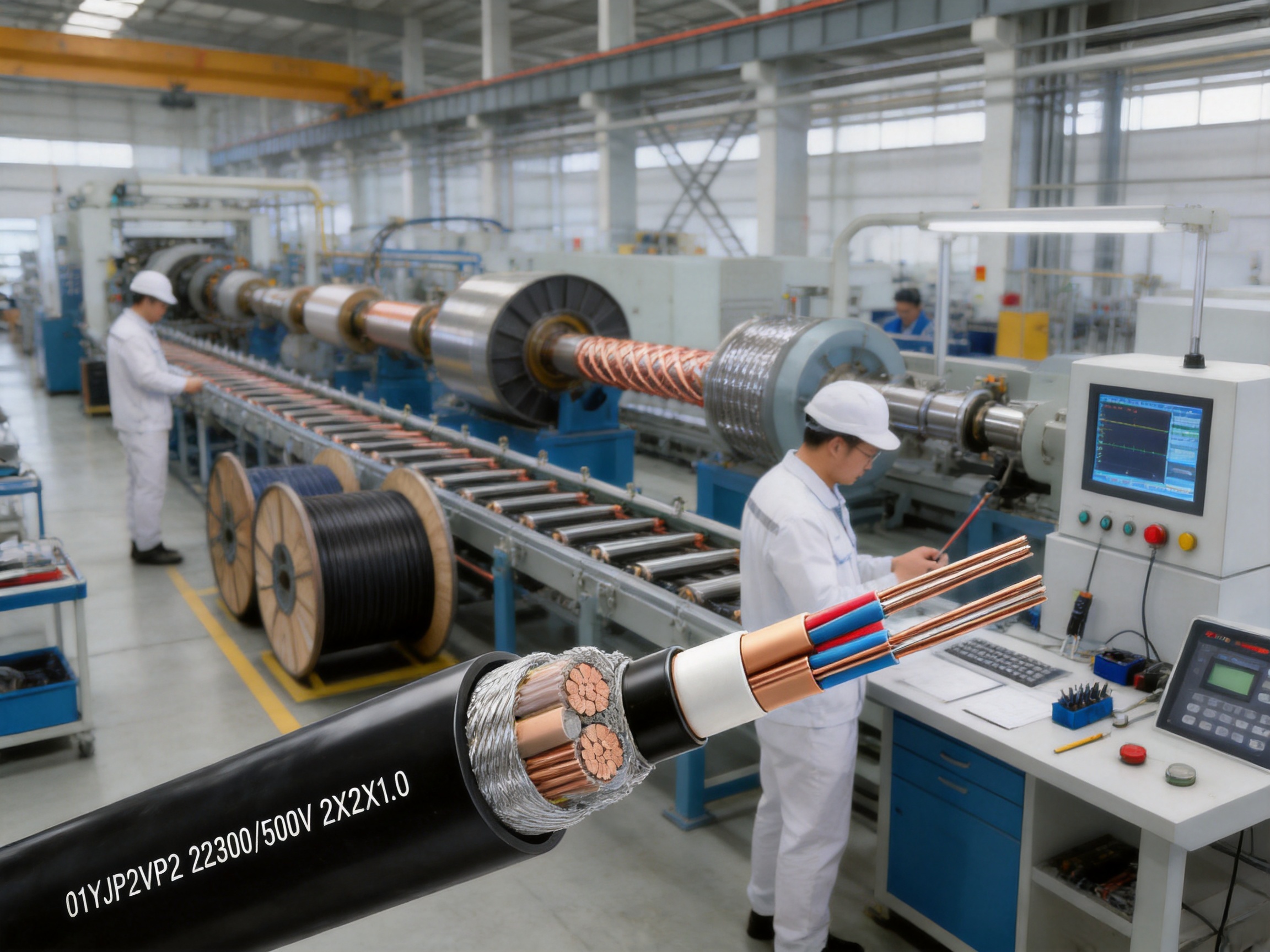
More than 70 production and testing lines provide the infrastructure for controlled manufacturing and inspection. Production lines must be coordinated so that conductors, insulation layers, shields, and outer coverings are formed with repeatable dimensions. Testing lines allow the finished product and, where appropriate, intermediate processes to be evaluated before shipment.
The company uses online eccentricity monitoring equipment. Eccentricity refers to the degree to which a conductor or insulation layer is positioned away from the intended center. Monitoring this characteristic during production helps identify irregularities in the insulation wall and supports more consistent cable geometry. Stable geometry contributes to dependable electrical separation and predictable manufacturing quality.
The company also uses high-voltage series resonance testers and partial discharge detectors. These tools are associated with advanced electrical testing and help the manufacturer evaluate insulation performance and detect potential defects or weaknesses. Although the exact testing program depends on the product category and applicable requirements, the presence of this equipment demonstrates an investment in systematic electrical quality control.
6. Quality Management and Certification Foundation
Wuxi Guanghuan Cable Co., Ltd. has obtained ISO 9001, ISO 14001, ISO 45001, and ISO 50001 certifications, as well as GB/T 29490, Green Management System, Social Responsibility Management System, and After-Sales Service Management System certifications. Together, these systems reflect a structured approach to quality, environmental responsibility, occupational health and safety, energy management, intellectual property, social responsibility, and service.
6.1 Quality Management
ISO 9001-based quality management emphasizes controlled processes, documented procedures, customer requirements, corrective action, and continual improvement. For cable manufacturing, this approach can help connect raw-material control, production parameters, testing, inspection, packaging, and delivery into one traceable system.
Quality is not created only at the final inspection stage. It begins with material selection and continues through conductor preparation, insulation application, shielding, cabling, sheath extrusion, marking, testing, and packaging. A comprehensive management system encourages attention to each stage rather than relying solely on end-of-line testing.
6.2 Environmental and Energy Management
Environmental and energy-management certifications indicate that the company has established systems addressing environmental impacts and energy use. Cable manufacturing involves metal processing, polymer processing, heating, cooling, testing, packaging, and logistics. Improving resource efficiency and controlling environmental aspects can support more responsible long-term manufacturing.
These systems are increasingly important for industrial customers that evaluate suppliers not only by technical performance but also by environmental and sustainability requirements. A manufacturer with documented management practices is better positioned to respond to procurement expectations concerning responsible production.
6.3 Occupational Safety and Social Responsibility
Occupational health and safety management is important in a manufacturing environment that uses production machinery, electrical test equipment, lifting systems, heating equipment, and material-handling operations. A structured safety system supports risk identification, employee training, safe procedures, and incident prevention.
Social responsibility management further demonstrates that manufacturing performance is considered alongside employee welfare, ethical operations, and responsible business conduct. These factors contribute to a supplier relationship that extends beyond the delivery of a single cable order.
7. Manufacturing Process for Signal Cable Reliability
Although specific process parameters may vary by model, the manufacture of computer and instrument shielded cable generally involves several coordinated stages. Each stage contributes to the final product’s electrical, mechanical, and installation performance.
7.1 Conductor Preparation
Conductors are prepared from suitable conductive materials and processed into the required configuration. The process may involve drawing, annealing, stranding, or other operations depending on the specification. Dimensional consistency, surface condition, and cleanliness are important because imperfections can affect insulation adhesion, electrical resistance, and subsequent processing.
At this stage, production control helps ensure that the conductor meets the requirements for the intended cable design. Consistent conductor characteristics also support stable downstream extrusion and cable assembly.
7.2 Insulation Extrusion
Insulation is applied around the conductor through an extrusion process. The insulation must be distributed evenly and must adhere properly to the conductor surface. Online eccentricity monitoring can help identify deviations during production so that adjustments can be made before large quantities of product are affected.
Stable extrusion conditions contribute to consistent wall thickness, electrical separation, and dimensional compatibility with later stages. For multi-core or multi-pair cables, uniform insulation also supports orderly assembly and identification.
7.3 Pairing and Cabling
Where the design uses paired conductors, the insulated wires are arranged into pairs according to the specified lay and identification system. Multiple pairs or cores may then be assembled into the required cable structure. The cabling process must maintain the intended geometry without creating unnecessary deformation or excessive internal stress.
Careful assembly supports consistent spacing between circuits and helps maintain the cable’s designed electrical characteristics. It also contributes to a manageable finished diameter and practical installation behavior.
7.4 Shield Application
The shield is applied around the appropriate conductor, pair, group, or complete cable assembly. Process control is important to achieve consistent coverage, correct overlap or contact, and stable positioning. The shield must remain continuous and mechanically integrated with the surrounding cable structure.
Shielding quality is central to the product’s purpose. Inconsistent application could reduce the cable’s ability to limit electromagnetic interference. For this reason, shielding is not treated as a cosmetic layer; it is a functional component requiring controlled production and inspection.
7.5 Outer Sheath Application
The outer sheath is applied to protect the assembled cable and maintain its structural integrity. The extrusion process must produce a smooth, continuous covering with suitable dimensions. Marking may be applied to assist identification of the product, size, batch, or other required information.
The final cable is then inspected and tested according to the applicable specification. Tests may address dimensions, conductor continuity, insulation characteristics, shielding continuity, electrical performance, appearance, and other requirements relevant to the product design.
7.6 Final Testing and Documentation
Testing provides evidence that the manufactured cable conforms to the intended requirements. A reliable supplier should be able to connect product identification with production records, inspection data, and shipment documentation. This information supports project acceptance, future maintenance, and quality traceability.
For large industrial projects, documentation is often as important as the physical product. Customers may require inspection reports, certificates, packing lists, product labels, and records confirming that the cable has passed the relevant tests. A manufacturer with established management systems is better equipped to organize this information.
8. Product Advantages for International and Industrial Buyers
Industrial buyers often evaluate cable suppliers according to more than unit price. They consider product suitability, delivery capability, quality consistency, certification, technical support, documentation, and after-sales service. The manufacturing profile of Wuxi Guanghuan Cable Co., Ltd. addresses several of these requirements.
8.1 Large-Scale Supply Capability
The company’s production area, equipment base, and broad product portfolio support large and varied orders. This can be valuable when a project requires multiple cable categories, including power cables, electrical equipment cables, overhead conductors, and special cables. A supplier capable of coordinating different cable requirements may simplify procurement and communication.
8.2 Technical Product Range
More than 30,000 specifications provide flexibility for projects with different conductor counts, dimensions, shielding configurations, and application conditions. Customers can discuss the intended use with the manufacturer and select a construction aligned with the system design rather than adapting the project to a limited standard product range.
8.3 Certification and Market Recognition
The company has received CCC, TÜV, product carbon footprint, China Energy-Saving and Environmentally Friendly Product, and other certifications. The appropriate certification depends on the product and target market, so buyers should confirm the exact certification applicable to the ordered cable. Nevertheless, this certification experience indicates familiarity with formal product evaluation and compliance processes.
The company has also been recognized as a National High-Tech Enterprise, one of China’s Top 500 Machinery Enterprises, a Jiangsu Specialized, Sophisticated, Distinctive and Innovative SME, a Jiangsu Provincial Green Factory, a National Intellectual Property Advantage Enterprise, and a Quality Integrity Enterprise. These recognitions provide additional context regarding its technical development, operational capability, and quality-oriented approach.
8.4 Experience with Energy and Engineering Customers
Guanghuan Cable has passed qualification and capability verification for power cables and conductors conducted by the State Grid Corporation of China. It serves power companies and major energy and engineering enterprises across China. Experience with demanding energy and engineering customers may support the disciplined production and documentation expected in industrial automation projects.
9. Selecting the Correct Cable for a Project
Choosing a computer and instrument shielded cable should begin with a clear understanding of the system. The buyer should identify the signal type, number of circuits, operating voltage, installation route, environmental exposure, required cable length, termination method, and applicable project standards.
9.1 Electrical Requirements
Important electrical considerations may include conductor size, number of cores or pairs, circuit identification, signal type, insulation requirements, and compatibility with connected instruments. The manufacturer should receive sufficient technical information to recommend an appropriate construction.
9.2 Interference Environment
The location of nearby motors, transformers, converters, power cables, switching devices, and other electrical equipment should be reviewed. If the cable must share a tray or pass through an area with substantial electromagnetic activity, shielding requirements may be more demanding than those for a quiet control room.
Routing and separation are also important. Even a shielded cable should not automatically be installed directly alongside high-power circuits without considering the project’s electrical design. Good engineering combines cable selection with appropriate routing, grounding, bonding, and termination.
9.3 Mechanical and Environmental Conditions
Buyers should evaluate temperature, moisture, dust, chemical exposure, ultraviolet exposure, vibration, bending, pulling forces, and possible impact. The outer sheath and complete cable construction must be appropriate for the installation environment. Indoor cabinet wiring may require a different construction from outdoor industrial routing.
9.4 Installation and Grounding
The shield’s effectiveness depends on how it is connected. Grounding practices must be established according to the system design and applicable engineering requirements. Installers should avoid damaging the shield during stripping and termination, maintain continuity where required, and use suitable glands, connectors, and terminal accessories.
Incorrect grounding can reduce the benefit of shielding or create unwanted ground-current problems. The cable supplier, system designer, and installation contractor should coordinate these details before commissioning.
10. Installation and Maintenance Recommendations
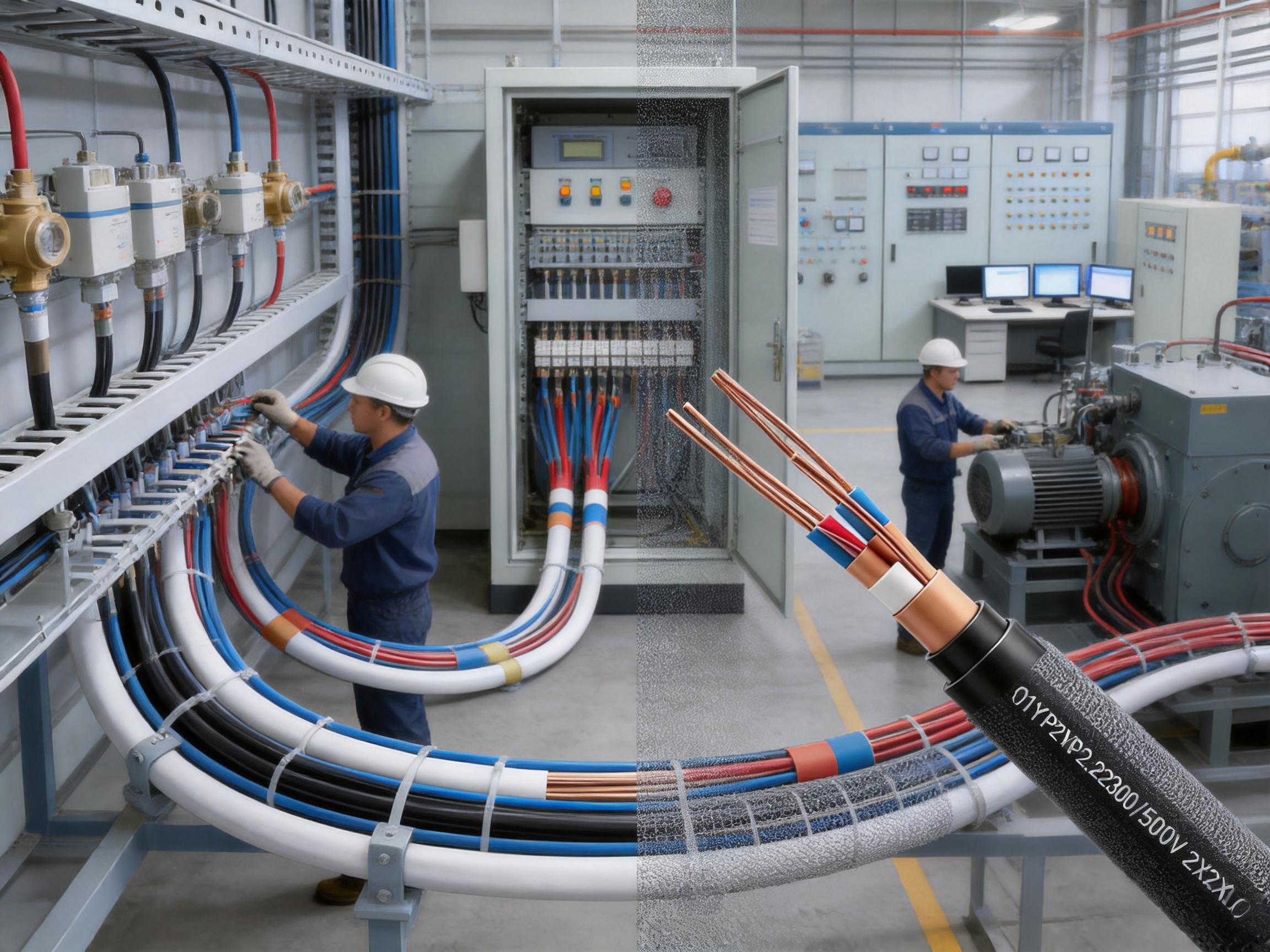
Proper installation protects the investment made in a shielded cable system. Cables should be handled according to their construction and should not be pulled beyond the permitted force or bent below the recommended minimum radius. Excessive mechanical stress can damage the sheath, insulation, shield, or internal arrangement.
During installation, the cable should be protected from sharp edges, crushing, uncontrolled twisting, and unnecessary abrasion. Cable trays, conduits, supports, glands, and clamps should be selected to hold the cable securely without creating localized pressure.
Signal cables should be routed with consideration for power cables and other interference sources. Where separation is required, the specified spacing or barrier arrangement should be maintained. Crossing power circuits at suitable angles may be preferable to long parallel runs, subject to the project’s electrical design.
At termination points, installers should preserve the cable’s identification system and record each circuit accurately. Shield termination should follow the design requirements. Exposed shield components should be protected from accidental contact, and the connection should be inspected for continuity and mechanical security.
Maintenance teams should periodically examine cable routes, terminal points, glands, connectors, and grounding connections. Signs of moisture, abrasion, chemical damage, overheating, loose connections, or physical deformation should be investigated promptly. Troubleshooting should include both the cable and connected equipment because signal problems may result from sensors, modules, grounding, software, or environmental changes.
11. Quality Assurance from Production to Delivery
A reliable cable supplier treats quality as a continuous process. At the beginning, raw materials must be controlled and verified. During production, conductor dimensions, insulation thickness, concentricity, shield application, cable diameter, and marking should be monitored. After production, electrical and visual inspections provide additional confirmation.
Wuxi Guanghuan Cable Co., Ltd. emphasizes comprehensive quality management throughout the production process. The use of online eccentricity monitors, high-voltage series resonance testers, and partial discharge detectors demonstrates a commitment to using specialized equipment rather than relying only on visual inspection.
Testing cannot replace good manufacturing, but it can identify defects that may not be visible. Combining process monitoring with final testing creates a stronger quality-control structure. This approach is particularly valuable for industrial cables, where a defect discovered after installation may be expensive and disruptive to correct.
Packaging and transportation are also part of product quality. Cable drums and packaging materials should protect the product from impact, moisture, contamination, and improper handling. Labels should remain readable so that the cable can be matched with the project documentation at the job site.
12. Sustainability and Responsible Manufacturing
Industrial customers increasingly evaluate the environmental profile of their supply chain. Cable manufacturers influence this profile through material use, energy consumption, production efficiency, waste control, packaging, and product service life. A durable cable that operates reliably for many years can reduce the need for premature replacement and associated material consumption.
Wuxi Guanghuan Cable Co., Ltd. has obtained ISO 14001 and ISO 50001 certifications and has been recognized as a Jiangsu Provincial Green Factory. It has also received product carbon footprint and China Energy-Saving and Environmentally Friendly Product certifications. These credentials indicate that environmental and energy considerations are incorporated into the company’s management and product activities.
Responsible manufacturing does not mean reducing technical performance. Instead, it aims to combine reliable products with controlled resource use, improved efficiency, and reduced environmental impact. For project owners with sustainability objectives, these factors may be included in supplier qualification and procurement evaluation.
13. Why This Product Is a Practical Choice
Computer and instrument shielded cable is a practical choice when a project requires dependable low-voltage signal transmission in an industrial environment. Its key value lies in the connection between cable construction and system performance. The shield helps reduce electromagnetic interference, the organized internal design supports multi-circuit installation, and the protective outer construction supports handling and service.
Compared with selecting generic wiring and attempting to correct signal problems later, specifying a purpose-designed shielded cable provides a more proactive engineering solution. It does not eliminate the need for good system design, but it gives the signal circuit an appropriate level of protection from the outset.
The manufacturing capabilities of Wuxi Guanghuan Cable Co., Ltd. further strengthen the product offering. The company combines more than two decades of cable-manufacturing experience, a large production base, extensive testing equipment, technical personnel, broad product coverage, quality-management certifications, and experience with energy and engineering customers.
For buyers, the most important advantage is not a single feature in isolation. It is the combination of application-focused product design, controlled manufacturing, testing capability, certification experience, documentation, and service support. Together, these elements can help industrial customers build signal-transmission systems that are more stable, maintainable, and suitable for demanding operating conditions.
14. Frequently Asked Questions
Q1: What is computer and instrument shielded cable used for?
It is used for low-voltage signal transmission between electronic computers, electrical instruments, automation devices, industrial control systems, and detection distribution units. It is designed to help connect field instrumentation with control and monitoring equipment while reducing the influence of electromagnetic interference.
Q2: What is the main advantage of the shielding layer?
The shielding layer helps reduce electromagnetic coupling from nearby electrical equipment and circuits. This can support better signal integrity and more stable readings in industrial environments. Its effectiveness also depends on suitable routing, grounding, bonding, termination, and installation practices.
Q3: Can shielded cable eliminate all electrical noise?
No. Shielded cable is an important part of an interference-control strategy, but it cannot eliminate every source of noise. Cable routing, equipment design, grounding, connectors, termination, power quality, and system configuration also influence signal performance.
Q4: How is shielded cable different from ordinary unshielded cable?
Shielded cable includes a conductive shielding structure intended to reduce the effect of external electromagnetic interference. Ordinary unshielded cable does not provide the same dedicated shielding function and may be more vulnerable when installed near motors, power cables, converters, transformers, or switching equipment.
Q5: What information should be provided when requesting a quotation?
Buyers should provide the required number of cores or pairs, conductor size, signal type, cable length, installation environment, operating conditions, shielding requirements, sheath requirements, applicable standards, packaging expectations, and delivery destination. Drawings, cable schedules, or equipment-interface information can also help the manufacturer recommend a suitable construction.
Q6: Is this product suitable for every industrial application?
The product is intended for computer, instrumentation, automation, control, and detection signal applications. The exact model must be selected according to the project’s electrical, mechanical, environmental, and regulatory requirements. A technical review should be completed before final selection.
Q7: Why is manufacturing consistency important for shielded cable?
Consistent conductor dimensions, insulation thickness, shield coverage, cable geometry, and outer sheath quality support predictable electrical and mechanical performance. Consistency is especially important for large projects, repeated orders, and installations where many cables must be terminated and maintained in the same manner.
Q8: What testing capabilities does the manufacturer have?
Wuxi Guanghuan Cable Co., Ltd. operates more than 70 production and testing lines and uses equipment including online eccentricity monitors, high-voltage series resonance testers, and partial discharge detectors. The exact tests performed depend on the product specification and applicable requirements.
Q9: Does the company manufacture other cable products?
Yes. Its product portfolio includes power cables, electrical equipment wires and cables, bare conductors, overhead insulated cables, high-speed railway and urban rail transit cables, and cables for energy storage, photovoltaic, and wind power applications. The company offers more than 100 product categories and over 30,000 specifications.
Q10: How should the cable shield be grounded?
Shield grounding should follow the project’s electrical design and applicable engineering requirements. The correct method may depend on the system architecture, signal type, equipment design, and interference environment. Installation personnel should preserve shield continuity where required and avoid creating unintended grounding paths.
Q11: What certifications does the manufacturer hold?
The company has obtained ISO 9001, ISO 14001, ISO 45001, ISO 50001, GB/T 29490, Green Management System, Social Responsibility Management System, and After-Sales Service Management System certifications. Its products have also received CCC, TÜV, product carbon footprint, China Energy-Saving and Environmentally Friendly Product, and other certifications. Buyers should confirm which certification applies to a specific product and destination market.
Q12: How can customers obtain technical assistance?
Customers can contact Wuxi Guanghuan Cable Co., Ltd. to discuss cable construction, application conditions, specifications, testing, documentation, and delivery. The company can be reached through web@guanghuancable.com or +86-13606153863.
Conclusion
Reliable industrial automation depends on reliable signal transmission. Computer and instrument shielded cable provides a purpose-designed connection between computers, instruments, controllers, and detection systems, helping protect low-voltage signals from electromagnetic interference and supporting accurate system operation.
Its advantages include improved interference resistance, better signal stability, organized multi-circuit construction, application-focused design, and support for long-term maintenance. These benefits become particularly valuable in factories, energy facilities, process plants, infrastructure projects, and other environments where signal cables operate close to electrical equipment.
Wuxi Guanghuan Cable Co., Ltd. supports this product with large-scale manufacturing facilities, more than 70 production and testing lines, technical personnel, specialized monitoring and testing equipment, extensive product experience, and multiple management-system certifications. Its broad cable portfolio and experience serving energy and engineering customers provide an additional foundation for supplying industrial cable solutions.
When selecting a cable, buyers should evaluate the entire application rather than relying on a single specification. Signal type, circuit quantity, interference environment, installation route, environmental exposure, grounding method, testing requirements, and documentation should all be considered. With the correct design and installation, computer and instrument shielded cable can form a dependable part of a modern industrial control and monitoring system.
References
1. Wuxi Guanghuan Cable Co., Ltd. Product information for computer and instrument shielded cable.
2. Wuxi Guanghuan Cable Co., Ltd. Corporate information, manufacturing capabilities, certifications, and product portfolio.
3. International Organization for Standardization. Quality management principles and ISO 9001 quality management system guidance.
4. International Organization for Standardization. Environmental management systems and ISO 14001 guidance.
5. International Organization for Standardization. Occupational health and safety management systems and ISO 45001 guidance.
6. International Organization for Standardization. Energy management systems and ISO 50001 guidance.
7. General principles of industrial electromagnetic compatibility, signal integrity, cable shielding, grounding, and instrumentation installation.
Product: Computer and Instrument Shielded Cable


Copyright © Wuxi Guanghuan Cable Co., Ltd. All Rights Reserved. Power Cables Manufacturer Electrical Wire And Cable Factory

